
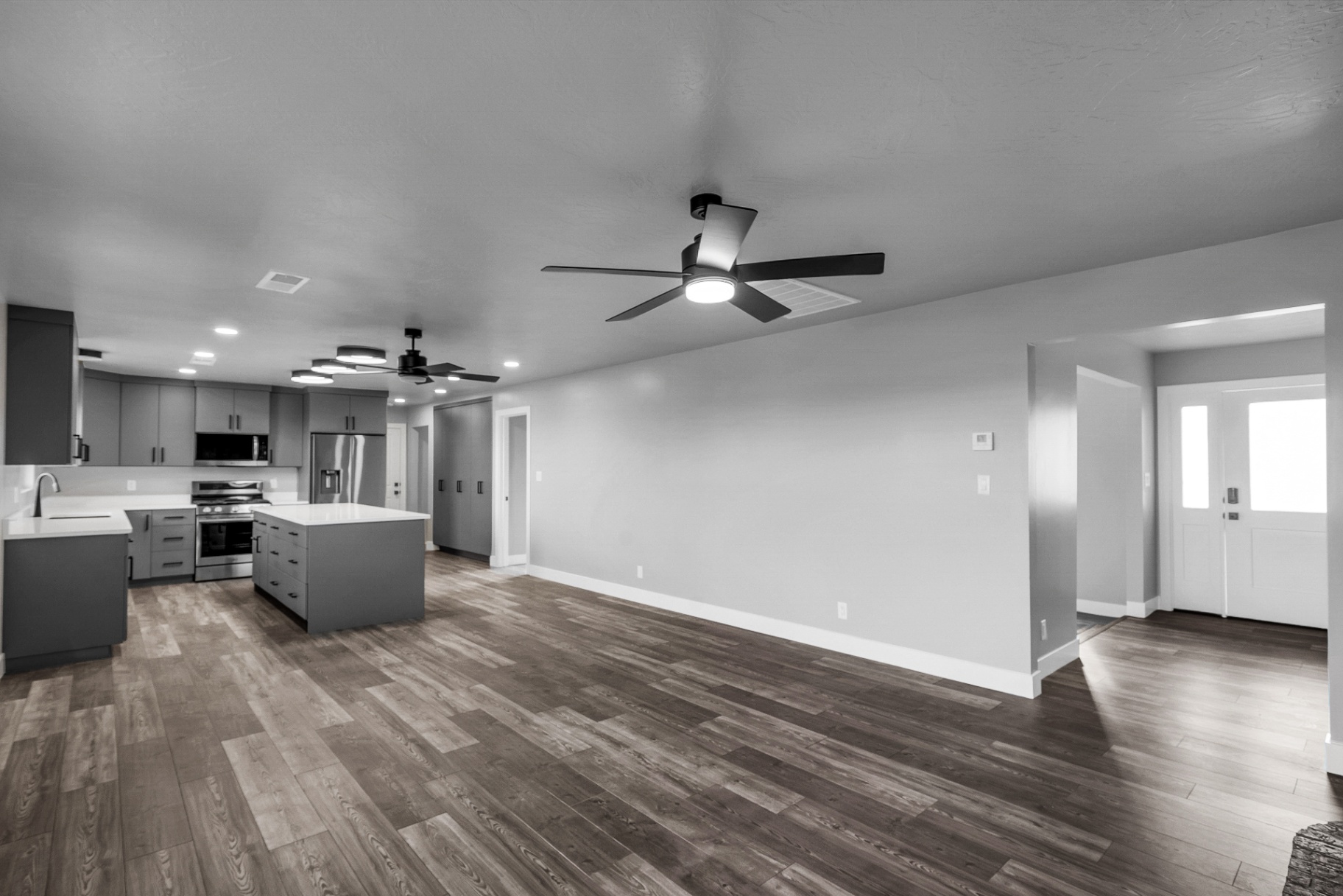

Finishing a garage can range from a modest upgrade to a major conversion, and the final number shifts quickly with scope. UNVERIFIED LEGACY EXAMPLE, not a 2026 current quote: the legacy article cited about $3,500 for a basic upgrade (drywall, insulation, painted floor), about $18,000 for a remodel with electrical and HVAC, and $20,000 or more for a full conversion with premium flooring. These figures have no verified source, are not Utah-specific and should not be used for budgeting. Get written local bids for your garage. Here’s what typically affects the scope:
- Budget finish includes drywall, basic insulation, and paint
- Mid-range finish adds lighting upgrades and epoxy floor
- High-end finish includes full electrical, HVAC, premium flooring, and cabinetry
- Drywall and insulation for a standard two-car garage represent a notable portion of the budget
- Electrical and lighting vary significantly depending on panel capacity and fixture count
- Flooring costs depend on material and the garage size
Garage size and finishing level are the two biggest levers on price. A single-car garage of about 250 square feet will generally involve less material and labor than a three-car space of about 900 square feet, even with identical materials. Scope creep is real here too: what starts as “just drywall and paint” often expands once the walls are open and you see what else needs attention.
What actually drives your garage finishing cost up or down
Several factors stack on top of each other to produce the final number, and understanding them upfront prevents budget surprises mid-project.
- Material costs: UNVERIFIED LEGACY EXAMPLE, not a 2026 current quote: the legacy article cited roughly $2–$4 per square foot installed for drywall. Insulation type also matters: compare installed bids and the assembly’s insulation and air-sealing details rather than assuming a material always costs less or performs better. Confirm current pricing with local bids.
- Labor: UNVERIFIED LEGACY EXAMPLE, not a 2026 current quote: the legacy article cited $50–$100 per hour for drywall work, and a general cost guide suggests labor can be a large share of total remodel cost on larger projects. Rates vary by trade, scope and market, so get written local bids.
- Garage size: A two-car garage is often roughly 400–500 sq ft, though sizes vary. Additional square footage generally adds material and labor, but not always in exact proportion.
- Finishing level: Basic shell-to-finished work with insulation, drywall, and flooring is one price tier. Adding texture, custom paint, built-in storage, or a mini-split HVAC system is another tier entirely.
- Permits and inspections: Whether a permit is required, and what it costs, depends on the scope, the local building department and its adopted code and fee schedule. UNVERIFIED LEGACY EXAMPLE, not a current fee: the legacy article cited about $1,400 for major remodeling permits. Verify requirements with your local building department before starting. Unpermitted work can complicate a future home sale.
- Electrical, HVAC, and plumbing costs can vary widely and add significantly to the budget depending on existing conditions and new requirements.
- Regional pricing: Labor and material costs can differ by market, including in Utah’s Washington and Iron Counties. Get local bids rather than relying on national cost calculators alone.
One thing most homeowners underestimate: site prep. If the concrete slab is uneven or the existing electrical panel is near capacity, those issues get resolved before a single sheet of drywall goes up. That prep work costs money, and it doesn’t show in the finished product.
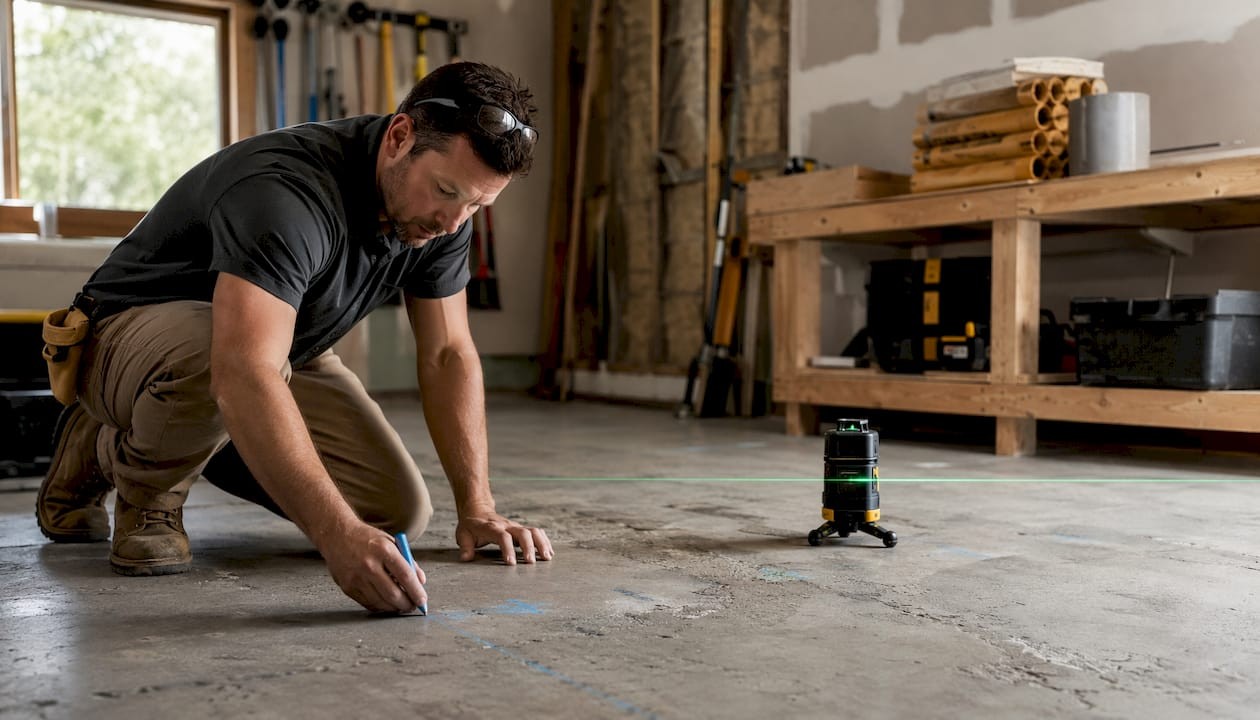
How much does drywall finishing cost for a garage?
Drywall is usually the single largest material line item in a garage finishing budget, and the costs vary more than most people expect.
- Material cost: UNVERIFIED LEGACY EXAMPLE, not a 2026 current quote: the legacy article cited $2–$3 per square foot installed for standard half-inch drywall and $3–$4 for fire-rated Type X. Whether Type X is required, and where, depends on the adopted code and the wall or ceiling location.
- Labor for hanging, taping, and mudding: UNVERIFIED LEGACY EXAMPLE: the legacy article cited $50–$100 per hour and one to three crew days for a two-car garage. Rates and duration vary with the contractor and scope.
- Full drywall finish for a two-car garage: UNVERIFIED LEGACY EXAMPLE: the legacy article, citing This Old House, suggested $2,000–$5,000 all-in. This was not verified for Utah or 2026. Get written bids.
- Finish levels: A lower drywall finish level generally costs less than a higher one. The finish level you need depends on the paint and lighting you plan to use. Specify the level in writing.
- Texture and paint: UNVERIFIED LEGACY EXAMPLE, not a 2026 current quote: the legacy article cited $1–$2 per square foot for texture and $0.50–$1.50 for paint. Confirm with local bids.
- Fire-rated requirements: Walls and ceilings that separate a garage from living space are commonly governed by fire-separation provisions of the adopted residential code (for example, IRC R302.6 in the model code). The required drywall type and thickness depend on the adopted edition, local amendments and the assembly, so confirm with your local building department and have the plans reviewed.
One common extra cost: garages with exposed ceiling joists require more drywall and labor than a garage with a finished ceiling already in place. If you’re drywalling the ceiling too, ask each bidder how much it adds to the drywall scope. UNVERIFIED LEGACY EXAMPLE: the legacy article suggested roughly 30–40% more, which was not verified.
Pro Tip: Get bids that specify the drywall finish level in writing. “Drywall installation” on a quote can mean anything from bare hung panels to a fully sanded, paint-ready Level 5 surface. The difference in labor cost between finish levels can be meaningful. UNVERIFIED LEGACY EXAMPLE, not a 2026 current quote: the legacy article cited $500–$1,000 for a two-car garage.
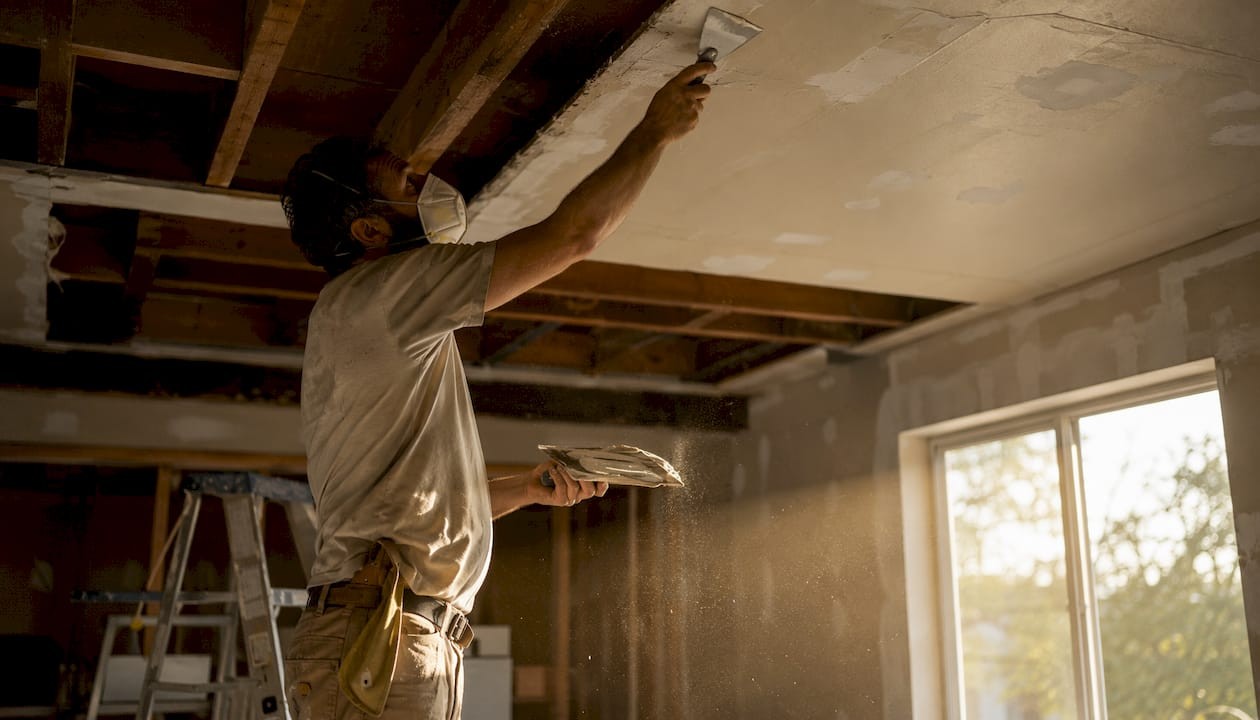
How to budget your garage remodel and keep costs manageable
The homeowners who stay on budget aren’t necessarily the ones who spend the least. They’re the ones who decide upfront what they actually need versus what would be nice to have.
- Start with the fundamentals: Insulation, lighting, and flooring deliver the most usable improvement per dollar. Prioritizing these foundational elements yields higher long-term satisfaction than spending the same money on cosmetic upgrades.
- Set a realistic scope budget: Decide the scope first, then price it. UNVERIFIED LEGACY EXAMPLE, not a 2026 current quote: the legacy article cited about $3,500 for a basic finish and about $18,000 for a remodel with electrical and HVAC. These are unverified.
- DIY where it makes sense: Painting, shelving installation, and basic flooring are reasonable DIY tasks. DIY can reduce labor cost on those specific tasks, depending on your skill and time. Electrical, structural work, and anything requiring a permit should go to a licensed professional where your jurisdiction requires one. Check local rules on owner-performed work.
- Budget for permits: Ask your local building department which permits your scope needs and what they cost. The legacy figure of roughly $1,400 is an UNVERIFIED LEGACY EXAMPLE, not a current fee. Unpermitted work can show up at resale.
- Account for site prep: Older garages often need electrical panel upgrades or slab leveling before cosmetic work begins. Consider a contingency for these hidden prep costs; choose the allowance using the actual condition and scope rather than an unverified standard percentage.
- Time your project strategically: Contractor availability can vary by season. Ask bidders about scheduling, but pricing and availability are not guaranteed to improve at any time of year.
- Get three bids: Prices vary significantly between contractors even in the same market. Three bids give you a real picture of fair pricing and reveal outliers in both directions.
The garage construction cost breakdown for your specific size and configuration is worth reviewing before you start collecting bids. Knowing your numbers going in puts you in a much stronger position.
Pro Tip: When evaluating contractors, ask specifically whether their quote includes drywall finishing to a paint-ready level, permit fees, and debris removal. These three items are frequently excluded from low bids and added back as change orders.
Does finishing a garage actually add home value?
The short answer: it depends. Finishing a garage can improve function and comfort, and some buyers may value it, but resale value and return on investment are not guaranteed and vary by market, quality of work and permitting. One real estate source discusses this; an appraiser or local agent can speak to your market.
- Resale appeal: Some buyers may see a finished garage as an upgrade, particularly when it’s climate-controlled and wired for a workshop or home gym. Buyer preferences vary.
- Functional value: The day-to-day benefit of a comfortable, usable garage often matters more to the current owner than the eventual resale bump. A finished garage used as a home office or gym adds value that doesn’t show up in an appraisal.
- Market variation: Buyer preferences differ by area. A local real estate agent can tell you how a finished garage with workshop or gear storage is viewed in your neighborhood.
- Quality matters: Quality of finish and documentation of permits may influence how buyers see the space. A rushed finish with visible tape lines and peeling floor paint can detract from it.
- Conversion vs. upgrade: Converting a garage to living space is a larger project, may cost significantly more, and may need to meet residential requirements for habitable space. How an appraiser treats converted space varies, so there is no guarantee of added appraised value.
Buyers tend to evaluate a home as a whole, so a finished garage that matches the quality of the rest of the home may be received better than one that looks like an afterthought. No combination of projects guarantees a return.
Garage Finishing Decisions to Discuss With Your Builder
The gap between a garage that looks finished and one that actually performs well over time comes down to a few decisions made early in the project.
Insulation, lighting, and moisture resistance are core planning topics for a garage finishing project. Skipping them to save money upfront can lead to higher cost later. Code compliance is a legal matter, and meeting it supports safety and future resale.
Common issues on garage finishing and conversion projects include:
- Underestimating prep work: Existing garages may need electrical upgrades, slab repairs or other preparation. Have the condition and proposed systems evaluated before pricing the work.
- Conversion complexity: Converting a garage to habitable living space may bring additional residential code requirements, depending on the adopted code and scope. UNVERIFIED LEGACY EXAMPLE, not a current quote: the legacy article cited projects starting around $18,500 for 200 square feet that grew 15%–25% when code issues surfaced. This was presented as a project example without verification. It should not be used for budgeting.
- Fire-rated drywall compliance: Walls and ceilings shared with the home’s living areas can be subject to fire-separation requirements in the adopted code. Confirm requirements with your local building department.
- Unpermitted work risks: Many jurisdictions require permits and licensed professionals for major electrical, HVAC and structural modifications, but requirements vary. Verify what applies with your local building department. Unpermitted work can create issues at resale.
- Design review: Ask whether drawings, renderings or virtual discussions are available and included in the proposed scope. Early review can clarify decisions but does not guarantee cost or schedule outcomes.
The foundation choices under your garage slab also affect what’s possible with flooring and moisture management — worth understanding before committing to a finish plan.
Discuss Your Garage Finishing Scope
Finishing a garage well requires more than picking materials off a list. It helps to work with someone who understands the local building codes and permit process, and who can manage the full scope from insulation to final paint. Confirm requirements with your local building department.
Explore the full-home remodeling resource when garage work is part of a broader renovation. Ask Prestigious Home Builders about availability and the proposed services, drawings and coordination for your garage. A written scope helps clarify assumptions; unforeseen conditions can still lead to changes.
Whether you’re finishing a two-car garage for a home gym, converting a space for a family member, or simply adding insulation and drywall to make the space usable year-round, discuss the proposed work and coordination with Prestigious Home Builders. Reach out to discuss your project and request a quote for your specific garage and goals.
Key Takeaways
Garage finishing costs vary significantly from modest upgrades to extensive conversions. Drywall, insulation, and labor are primary cost contributors.
| Point | Details |
|---|---|
| Cost | Garage finishing project costs depend heavily on scope, size, and finishing level; legacy figures on this page are unverified examples. |
| Drywall cost | Drywall finishing is a significant portion of the budget for a standard two-car garage. |
| Permits matter | Verify permit requirements for your scope with your local building department. |
| DIY savings | DIY work can reduce labor costs on specific tasks. Licensed professionals are recommended for electrical and structural work. |
| Project discussion | Ask Prestigious Home Builders about current availability and the scope proposed for your garage. |
References and Verification
These references support the planning distinctions above, not a project-specific approval, incentive award or financial outcome. Verify the rules and documents applicable to your address, installation date and agreement.
Plan the Next Step
Explore Garage Construction and request a consultation for your proposed construction scope.