

Resale and appraisal context: Return percentages and dollar examples retained here are unverified legacy third-party or hypothetical illustrations, not current Utah averages, quotes, or predictions for any home. Market response, comparable sales, scope, and appraisal requirements vary; spending does not guarantee added value or cost recovery. Confirm valuation and financing needs with a qualified appraiser and lender, and property-tax questions with the county assessor or a tax advisor.
Garage doors, entry doors, curb-appeal fixes, minor kitchen refreshes, and midrange bathroom updates appear in third-party resale-return reporting. Legacy third-party examples linked in the original article include garage door recoup estimates of 194% to 268% and staging price-premium estimates of 5% to 13%. These are illustrative, unverified legacy figures, not current local estimates, causal guarantees, or predictions for a particular home. Report rankings vary by year, market, and scope.
Start here if you’re deciding where to spend:
- Garage door replacement
- Steel entry door swap
- Landscaping and exterior paint refresh
- Minor kitchen remodel (refacing, counters, mid-tier appliances)
- Midrange bathroom update
- Selective siding or stone veneer accent
- Staging, professional photos, and listing-price review before construction
Consider scaling back an upscale primary suite, a pool, or a full luxury kitchen gut when resale is the priority. Compare the scope with nearby comparable sales rather than assuming buyers will reimburse the cost.
Key Takeaways
Cost-conscious exterior and minor-scope remodels are worth comparing with luxury renovations; staging and listing strategy also deserve consideration, without assuming a resale return.
| Point | Details |
|---|---|
| Compare exterior projects | Garage door replacement appears in third-party return reports; rankings do not predict an individual sale. |
| Compare kitchen scopes | Minor refreshes and full renovations have different costs and functions; reported recoup estimates depend on scope and market. |
| Consider presentation | Staging may improve presentation, but a price premium is not assured. |
| Match scope to neighborhood | Comparable sales help assess market context, not a fixed price ceiling. |
| Plan scope and documentation | Review the written scope, budget, and appraisal needs before construction. |
- Remodels That Add Value: Comparing Cost and Return
- How to Read ROI Numbers Before You Spend
- Presentation Fixes to Consider Before You List
- How to Choose Which Remodel to Fund First
- Planning a Value-Focused Remodel
- Sources
Remodels That Add Value: Comparing Cost and Return
Not every project on a “remodels that add value” list deserves equal attention. The categories below reflect projects discussed in third-party reporting, not a verified ranking or a forecast of resale results.
Garage door replacement. Legacy third-party analyses cited in the original article put recoup estimates as high as 268%. This unverified historical example is illustrative, not a current local return or a prediction. A garage door can be a prominent part of the front facade; consider whether its condition detracts from the home’s appearance.
Entry door and curb-appeal swaps. A steel or fiberglass entry door, refreshed exterior paint, and a stone veneer accent can change the appearance of the front elevation. Assess their condition and relevance to your home rather than assuming they return more than they cost.
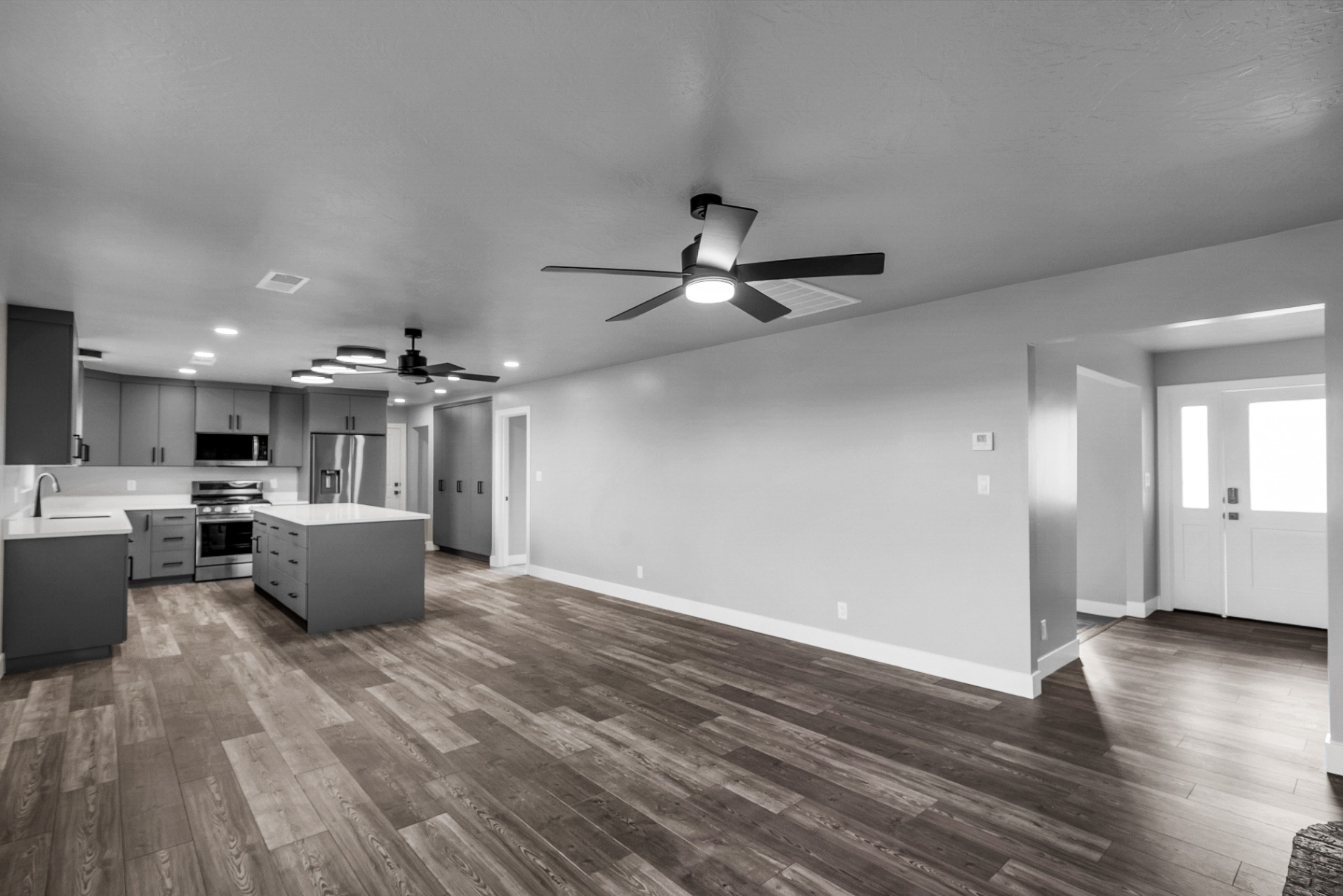
Minor kitchen remodel. Refacing cabinets instead of replacing them, updating countertops, and choosing a matching appliance set offer a narrower scope than a full luxury kitchen gut. The original article linked a third-party $10,000 cosmetic kitchen example; that unverified legacy figure is illustrative, not Prestigious pricing or a current local budget. Compare kitchen remodeling options against the condition and function of your existing kitchen.
Reading return reports: A reported recoup estimate above project cost is not a guaranteed gain. Check the report’s year, geography, scope, and methodology before using it as context.
Midrange bathroom remodel. New fixtures, updated tile, better lighting, and a fresh vanity address visible features. Heated floors and a freestanding soaking tub expand scope without ensuring additional resale proceeds. Compare bathroom remodeling options with your functional needs and local market context.
Basement finishing or room additions. Added usable space may appeal to buyers, but appraisal treatment and market response depend on the property and comparable sales. Compare the utility of bedrooms and bathrooms with specialized spaces such as a home theater; no single use guarantees a better return.
Pools, oversized primary suites, and ultra-upscale finishes. These projects may serve personal priorities without recovering their cost at resale. Buyer preferences and maintenance concerns vary by market; they do not automatically reduce a home’s value.
How to Read ROI Numbers Before You Spend
Recoup percentage in resale reports compares estimated resale value attributable to an improvement with its project cost. It is not a guaranteed payment or the same as net profit after selling and carrying costs. An appraisal considers comparable sales rather than automatically adding each remodeling expense to value. Buyer response and appraised value can differ.
The original article’s arithmetic can illustrate the difference between recouped cost and profit, but cannot estimate a specific home’s value:
- Legacy hypothetical only: a $5,000 project with an assumed $7,500 resale contribution would recoup more than its project cost, but $7,500 is not net profit.
- Legacy hypothetical only: a $50,000 kitchen project assumed to recoup half its cost would leave part of the expense unrecovered.
These unverified illustrative assumptions are not forecasts, quotes, or current local averages.
That doesn’t mean skip the kitchen. It means compare the scope with your household needs and local comparable sales rather than assuming spending translates directly into appraised or sale value.
ARV, Comparables, and Appraisal Planning
After-renovation value (ARV) refers to an estimate of a home’s value after planned improvements. It is not the project cost or a fixed recoverable share of that cost. A remodel budget alone cannot establish ARV.
An “as-is” appraisal considers the home in its current condition. An “as-completed” appraisal considers the planned improvements using the scope, estimates, and comparable sales of similarly improved homes. Ask your lender which appraisal approach and documentation its renovation financing requires before construction; do not assume a homeowner calculation will meet underwriting requirements.
Recent comparable sales should be relevant to the home’s size, condition, and finish level. Review completed sales, not just asking prices. Appraisers may consider the level of updating and the condition of systems alongside cosmetic work. The secondary article cites Fannie Mae guidance on condition and quality; applicability depends on the assignment and loan program. Energy-efficient improvements may be considered, but their contribution depends on local market evidence, not a fixed value formula.
Keep a documentation folder with:
- A written scope matching the work, with itemized estimates and invoices.
- Before-and-after photos showing what changed.
- Copies of applicable permits and approval records; confirm requirements with the local building authority.
- A proposed schedule and relevant comparable-sale information for discussion with the lender or appraiser.
Documentation supports review; it does not guarantee lender acceptance or an appraisal increase. For property-tax consequences, consult the county assessor or a tax advisor rather than inferring a tax outcome from a remodel budget.
Before remodeling for a sale, ask: Who are the likely buyers? What do nearby remodeled homes actually sell for? Does construction fit the intended listing schedule? How will mortgage payments, utilities, insurance, and selling costs affect the overall budget? These questions help separate personal-use goals from resale assumptions.
Presentation Fixes to Consider Before You List
Deep cleaning, decluttering, and staging can improve presentation without a major remodel. They do not ensure a price premium. Assess which tasks you can handle and which need professional help before undertaking the projects below.
- Neutral interior paint throughout, plus a fresh coat on the front door
- Updated cabinet hardware and lighting fixtures in the kitchen
- Landscaping refresh: fresh mulch, trimmed hedges, and a good power washing of siding and walkways
- Re-caulking tubs and showers, updated bathroom lighting, and swapped faucet fixtures
- Removing clutter and personal items so rooms photograph larger
Pro Tip: Photograph your home before and after decluttering to compare how mail piles, extra furniture, and other visual distractions affect the listing photos.
How to Choose Which Remodel to Fund First
Before you sign a contract, use this order of operations to compare scope, condition, and budget; it cannot eliminate overspending or assure resale results.
- Assess condition gaps first. A failing roof, an aging HVAC system, or outdated electrical panels may raise inspection or buyer concerns. Address condition and safety needs rather than ranking these repairs solely by resale estimates.
- Pull local comps. Review what similar homes sold for and what features they had. Comparable sales provide context, not a fixed ceiling or predicted sale price.
- Set a spending priority. Decide how much of the project serves your own use versus resale goals; do not use a target recoup percentage as an expected outcome.
- Compare lower-disruption options. Paint, landscaping, and staging still need defined scope and a budget.
- Plan a contingency. The original article suggested 15% to 20% for work involving structural, plumbing, or electrical changes. This is an unverified legacy planning example, not a sufficient allowance for every project; discuss property-specific risks with your contractor.
- Ask contractors direct questions, including who handles permits under the jurisdiction’s adopted code and local building authority, what schedule assumptions apply, what written warranty covers labor versus materials, and how change orders get priced.
Financing options vary by project and borrower. Compare a HELOC, personal loan, or savings in light of rates, fees, repayment terms, and risks rather than assuming one option is best. Discuss financing suitability with your lender or financial advisor.
Planning a Value-Focused Remodel
Compare full-home remodeling with a more focused interior remodel before choosing scope. Review completed project examples for design context, not evidence of resale returns.
- Kitchen and bathroom scope based on condition, household needs, and comparable-sale context
- Exterior options such as siding, stone veneer, and curb-appeal work
- Room additions or ADUs where additional space is the goal, subject to local approvals
- A written scope, budget assumptions, and milestone schedule for discussion
Comparable sales and professional appraisal advice can inform major spending decisions, but neither guarantees that a remodel will recover its cost.
Homeowners weighing bathroom scope can review the bathroom remodel cost guide for planning context, not an appraisal prediction.
Planning Smaller Upgrades Over Time
Rather than treating remodeling as one major project, consider smaller functional upgrades over time as needs and budgets allow. A garage door, kitchen refresh, and bathroom update need not happen together. This is a planning approach, not a compounding financial return.
Discuss Scope Before Committing
Discuss your proposed scope, budget assumptions, and project priorities before committing to construction. A contractor’s estimate is not an appraisal or a forecast of resale proceeds.
Homeowners in Washington and Iron Counties can request a quote to discuss project scope and planning needs. Ask what the estimate includes and what remains subject to site conditions, approvals, and scope changes.