
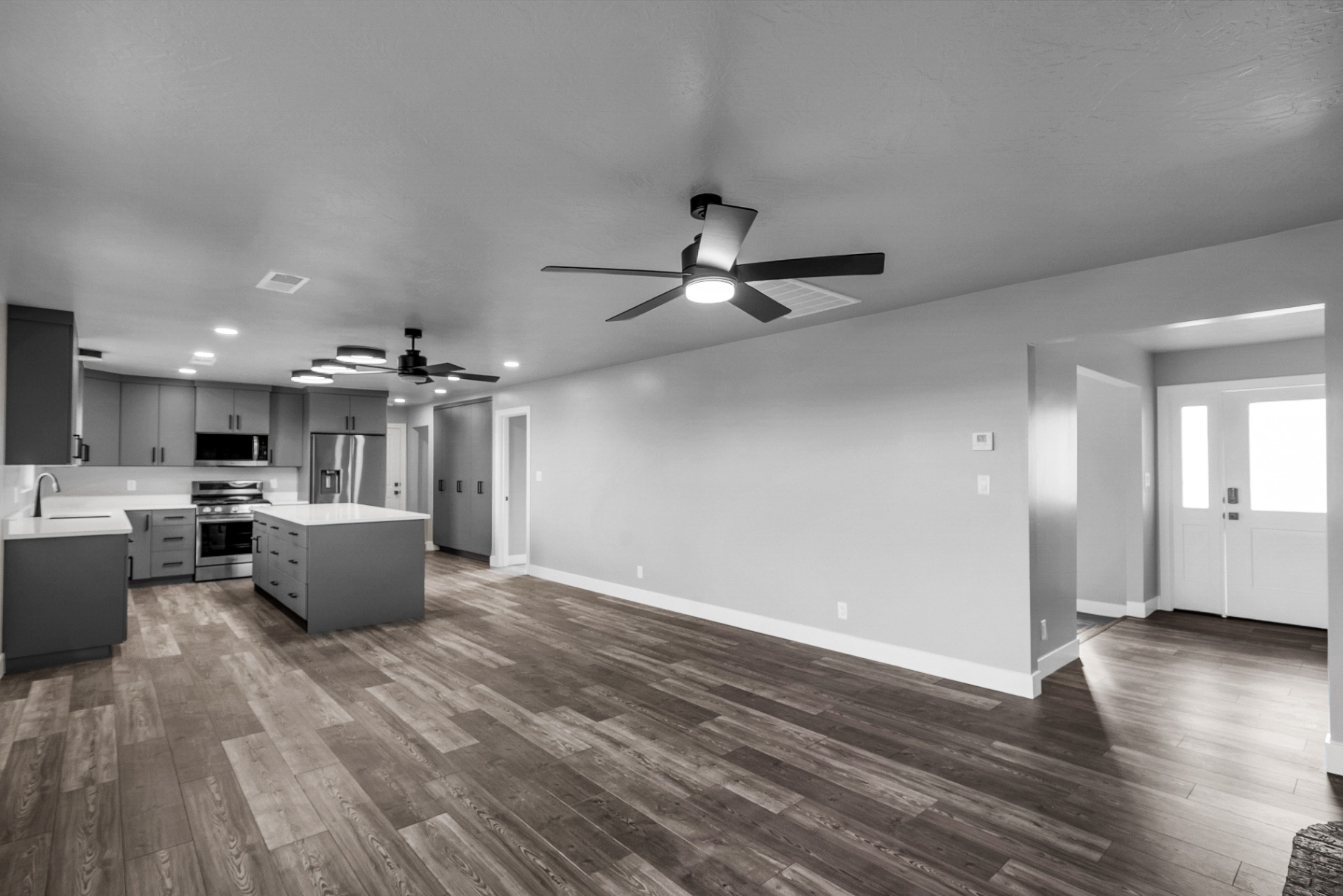
An accessory dwelling unit can change a property's utility and market appeal, but its effect on value is specific to the property and local market. To answer how much an ADU might add, distinguish appraised contributory value from construction cost, home equity, and rental cash flow. There is no reliable universal percentage increase.
The source does not establish a transferable percentage premium for homes with ADUs. Differences between properties with and without ADUs do not, by themselves, isolate the value created by construction. An ADU may add contributory value, but equity also depends on debt: borrowing to build can offset or exceed any value gain. Rental income does not automatically increase appraised value or qualify for lender underwriting.
To understand the impact of ADU on home value, we need to look at many factors. These include the local housing market, ADU design, and how it’s used. This introduction to ADUs and their benefits is the first step to seeing their value for property owners.
Understanding ADUs and Their Growth in Popularity
Accessory dwelling units, sometimes called granny flats or in-law suites, provide an additional dwelling associated with a primary home. Depending on the design and permitted use, they may support family housing or rental use; affordability and financial benefits vary.
An ADU can offer a balance of proximity and privacy for some households. Before planning an ADU project, consider both those household benefits and the property's likely market response rather than assuming a large value gain.
What Defines an ADU
An ADU may take the form of a qualifying garage conversion, basement apartment, or detached cottage with independent living facilities. Classification depends on the applicable definitions and approvals; separate utility service or meters are not universally required. Family occupancy, rental use, and home-business use must each comply with applicable rules.
Trends and Growth Rates of ADUs in the U.S.
ADU activity differs by location, definition, and reporting period. No authoritative dataset is supplied for the source's annual national growth figure, so it should not be used to forecast local demand or value. Review dated local permit, sales, and rental evidence when assessing a proposed project.
State and Federal Initiatives Encouraging ADU Construction
ADU-related financing, assistance, and land-use policies vary by program and jurisdiction. Do not assume grants, subsidized loans, or relaxed zoning are available to a particular owner. Verify any named program's administrator, current availability, eligibility, repayment terms, and restrictions before including it in a project budget.
Understanding an ADU's permitted uses, costs, and potential household benefits can support a more informed decision. Greater usefulness to one household does not establish a market premium or a verified environmental benefit.
The Impact of ADUs on Property Appraisals
An appraisal should describe the ADU and analyze its contribution to the whole property's market value. A construction or service page is not evidence of that contribution, and added floor area does not automatically receive the main dwelling's value per square foot.
The analysis depends on the assignment, applicable appraisal requirements, comparable sales, legal characteristics, condition, design, and market reaction. Potential rental income may be relevant where supported and appropriate, but there is no standard percentage uplift.
Appraised value, equity, and earnings are different measures. Equity reflects value less debt; earnings depend on actual income and expenses. A useful ADU can still cost more to build than it adds in resale value.
Ask a qualified appraiser familiar with the local market what evidence would be needed for the proposed property's evaluation. Neither favorable appraisal treatment nor financial gain is guaranteed.
Rental Income from ADUs
A legally rentable ADU may generate income, but rent is not guaranteed and gross receipts are not profit. Estimate achievable rent, vacancy, management, maintenance, utilities, insurance, taxes, financing, and reserves before evaluating potential cash flow.
Check whether short-term or long-term rental use is allowed for the specific unit. A higher nightly rate does not necessarily produce higher annual net income, and a long-term lease does not eliminate vacancy or collection risk. Potential rental income and appraised contributory value should be analyzed separately.
- Evaluation of local market rental rates
- Analysis of demographic trends favoring smaller living spaces
- Understanding local zoning laws and ADU regulations
Construction disruption depends on site access, existing conditions, utility work, and the building method. Prefabrication or conversion does not by itself establish lower disruption, lower cost, or a favorable return. Evaluate those assumptions using the actual project scope.
How ADUs Contribute to Real Estate Appreciation
An ADU's contribution at completion is different from later market appreciation. Future price changes also reflect broader market conditions and cannot be attributed to the ADU alone.
Size, design, condition, legal use, and flexibility can affect buyer interest. Use local market evidence to assess their contribution rather than assuming that added space or potential rent creates a large premium. Construction cost is not a direct measure of added market value.
Factors That Affect Home Value Appreciation with ADUs
- Design and Aesthetics: Assess layout, privacy, condition, and compatibility using evidence of local buyer preferences; matching the main house does not guarantee greater appreciation.
- Legal and Zoning Compliance: Document approvals and permitted use, and have any unresolved issues evaluated for their effect on marketability and financing.
- Location: Review comparable sales and rental demand in the property's actual competitive market rather than assuming busy locations command an ADU premium.
Case Studies: ADU Impact on Property Value
The source does not identify a verifiable Houston case study with dates, comparable properties, methods, and results. Do not treat the claimed faster sales or higher prices as established evidence.
For a useful case comparison, identify actual local transactions and account for differences in location, lot, primary dwelling, ADU condition, legal use, and sale date. A sale-price difference alone does not isolate the ADU's contribution.
Evidence from another city cannot guarantee local resale performance, equity growth, or continuing appreciation. Use a property-specific analysis before treating the project as an investment.
Market Demand for Homes with ADUs
Demand for a property with an ADU must be evaluated in its local competitive market. A primary home with an ADU should not automatically be treated as equivalent to every multi-unit property for zoning, appraisal, or financing purposes.
Household needs, housing costs, privacy, parking, and rental restrictions may affect interest. Determine whether recent local buyers have paid for the proposed features rather than assuming a national trend applies.
Rental use also involves management, expenses, and risk; it should not be presented as automatically passive income. A consumer blog is not, by itself, a verified appraisal study.
- In-law suites may support multigenerational living where the layout and permitted occupancy fit the household.
- Detached ADUs may offer privacy, but no unit type universally produces the best return on investment.
- Garage conversions require assessment of existing conditions, replacement parking, code compliance, and conversion costs before judging their value.
Review dated local evidence and applicable policies. General interest in ADUs or government policy support does not establish a premium for a particular property.
Cost vs. Value of Building an ADU
Compare the full development budget with independently supported contributory value and realistic net rental cash flow. These are separate measures, and the project need not recover its cost at resale.
Include design, approvals, site work, utility connections, construction, contingencies, financing, and operating costs as applicable. Identify exclusions and avoid counting the same benefit twice.
The source's numerical ranges have no documented location, scope, price date, or valuation method. Replace them with project-specific evidence rather than treating them as typical current costs or an average value gain.
| Cost Item | Evidence Needed |
|---|---|
| Design and Planning | Written scope and current proposals from the required design professionals. |
| Permitting | Current fee calculation from the responsible authorities for the actual scope. |
| Construction | Current project-specific estimate or bids, including site and utility assumptions. |
| Average Increase in Property Value | Property-specific market analysis or appraisal; no transferable average increase is established here. |
Household flexibility may have personal value even where the financial return is limited. Keep that benefit separate from resale proceeds or rental profit.
A favorable return is not guaranteed. Test whether the project still meets your goals if costs rise, rent is lower than expected, vacancies occur, or the eventual sale premium is smaller than anticipated.
Property Appraiser’s View on ADUs
A qualified appraiser can develop an opinion of value for a defined assignment and effective date, using relevant market evidence and property characteristics. An appraisal is not a guarantee of a future sale price, investment return, or a universally agreed value.
Zoning is one part of legal-use review. Building approvals, occupancy authorization, rental rules, and other applicable restrictions may also matter. Document the unit's status rather than assuming zoning compliance alone establishes lawful construction or use.
How Appraisers Assess ADUs During Property Evaluation
The appraiser selects methods appropriate to the assignment and available evidence, describing the ADU and analyzing relevant comparable sales. Potential rental income may inform the analysis where appropriate, but is not automatically capitalized into value or accepted for loan qualification. Scarce ADU comparables require reasoned analysis, not a fixed percentage adjustment.
Legal Considerations and Zoning Laws Influencing ADU Value
- Zoning rules for ADU size and placement
- Construction and habitation permits needed
- Rules on ADU use, like renting or owner occupancy
Unresolved approval or use issues can affect marketability, financing, and the cost of corrective work. Their valuation effect depends on the facts and market evidence. Confirm required approvals before construction or a change of use.
Where compliance is uncertain, consult the jurisdiction and appropriately qualified professionals about the available process and potential remedies. Do not assume a particular penalty, correction cost, or value reduction.
Maximizing Your Return On ADU Investments
Evaluate an ADU investment using a complete budget, lawful-use review, local market evidence, and realistic operating assumptions. Planning can improve decision quality, but no strategy guarantees higher rent, added resale value, or recovery of construction costs.
Original article video: How to Unlock Your Home’s Hidden Passive Income Stream (ADUs 101)
An ADU ROI calculator is a scenario tool, not a prediction or appraisal. Check its treatment of construction costs, financing, vacancy, operating expenses, taxes, reserves, and sale assumptions. Run less favorable scenarios and validate inputs independently.
Assess layout, access, finishes, and any furnishings against local demand and incremental cost. These choices may improve usefulness or appeal, but additional spending does not necessarily produce an equal or greater increase in rent or resale value.
- Evaluate access, privacy, and safety against applicable requirements and the needs of likely occupants.
- Compare the added cost of finishes and amenities with evidence of what local renters or buyers will pay for them.
- Market only lawful uses and accurately described features; advertising does not guarantee a tenant or higher net income.
When considering a future sale, ask how the ADU would compete with actual local alternatives and what evidence supports its contributory value. No percentage uplift is established here. Construction costs, debt, sale expenses, and market changes can outweigh an eventual price premium.
Conclusion
An ADU may add useful living space and contributory market value, but neither a resale premium nor rental profit is guaranteed. Evaluate the proposed property rather than relying on a national percentage or an uncited study.
Compare current project costs with local sales evidence and a realistic rental analysis. Separate appraised value from equity, cash flow, and future appreciation.
Multigenerational living and flexibility may be important personal benefits even when financial returns are uncertain. Confirm that the intended occupancy and rental uses are permitted.
Consider financing, operating costs, insurance, and potential tax consequences with appropriately qualified advisers. No particular assessment increase, deduction, credit, or after-tax return is established by this article.
Proceed only if the project fits your household goals, risk tolerance, and independently supported assumptions.
FAQ
How Much Does an ADU Increase Property Value?
There is no reliable universal percentage increase. An ADU's contributory value depends on local comparable sales, property characteristics, condition, legal use, and market response. Added floor area and potential rent do not automatically translate into an equivalent appraisal or sale-price increase.
What Defines an ADU?
An ADU is an additional dwelling associated with a primary home, with independent living facilities as defined by applicable rules. It may be internal, attached, or detached. Confirm the jurisdiction's definition and approvals; separate utility meters are not universally required.
What Are the Trends and Growth Rates of ADUs in the U.S.?
Growth varies by location, reporting period, and the definition used. The source does not substantiate its annual national count. Use identified, dated local permit or housing data, and do not treat growth alone as evidence of value gain or environmental performance.
How Are ADUs Encouraged by State and Federal Initiatives?
Policies and assistance vary by jurisdiction and program. Verify any specific financing or grant program's current availability, eligibility, terms, and restrictions with its administrator. Do not assume assistance or a zoning entitlement is available for the proposed property.
What Are Property Appraisal Basics for ADUs?
An appraisal analyzes the property for a defined assignment and effective date using appropriate methods and evidence. Relevant issues can include comparable sales, physical features, legal use, and marketability. Rental income is not automatically the valuation basis for every property.
How Do ADU Appraisal Values Compare to Traditional Home Appraisals?
An ADU's contributory value need not equal its construction cost or the primary dwelling's value per square foot. The appraiser must analyze relevant evidence; no standard percentage increase is established.
What Rental Income Can ADUs Provide?
Potential rent depends on lawful rental use, location, unit features, competition, and vacancy. Estimate net cash flow after operating expenses, reserves, financing, and applicable taxes. Neither mortgage coverage nor a corresponding increase in property value is guaranteed.
What Factors Affect Home Value Appreciation with ADUs?
Features, size, condition, layout, unit type, legal use, and location can affect market response. They do not establish that value will increase, or by how much. Review comparable evidence for the proposed property.
Are There Any Case Studies on ADU Impact on Property Value?
The source does not identify a verifiable Houston study or case with sufficient methods and transaction details. Do not rely on that example as proof. Request documented local comparisons and account for differences beyond the presence of an ADU.
What Are the Current Market Trends for Multi-unit Properties?
Demand varies by competitive market and property classification. Review dated local sales, rental listings, and absorption evidence rather than assuming a national increase applies. A primary home with an ADU is not automatically equivalent to every multi-unit property.
How Are Consumer Preferences Shifting Towards Homes with ADUs?
Some buyers may value multigenerational living, guest accommodation, or lawful rental use. Whether those preferences support a premium for a particular home requires local evidence; the source establishes no general shift in buyer demand.
What Are the Costs Associated with ADU Development?
Costs can include design, approvals, site work, utilities, construction, contingency, financing, and ongoing operations. Obtain current scope-specific estimates. Added resale value or net rental income may not recover the total investment.
How Do Investment and Long-term Value Increase Compare When Building an ADU?
Compare total costs with independently supported contributory value and projected net rental cash flow over a stated period. Include less favorable scenarios and any personal-use benefits separately. A positive long-term return is not assured.
How Do Appraisers Assess ADUs During Property Evaluation?
Appraisers describe the ADU and analyze evidence appropriate to the assignment, including relevant comparable sales, condition, quality, legal characteristics, and market response. Income analysis may be appropriate in some assignments, but potential rent is not automatically added to the property's value.
What Legal Considerations and Zoning Laws Influence ADU Value?
Review applicable zoning, building approvals, occupancy authorization, rental restrictions, and other property-specific conditions. Compliance questions can affect marketability and financing, but zoning compliance alone does not establish lawful construction or a particular appraised value.
What Strategies Can Enhance the ROI of an ADU?
Use verified local demand, a complete budget, lawful-use review, realistic operating assumptions, and sensitivity testing. Compare each feature's added cost with evidence of likely benefit. No finish level, amenity, or marketing strategy guarantees a higher return.
References and Verification
These references support the planning distinctions above, not a project-specific approval, incentive award or financial outcome. Verify the rules and documents applicable to your address, installation date and agreement.
- Reference 1: selling-guide.fanniemae.com
- Reference 2: selling-guide.fanniemae.com
- Reference 3: le.utah.gov
Plan the Next Step
Explore ADU Construction and request a consultation for your proposed construction scope.