
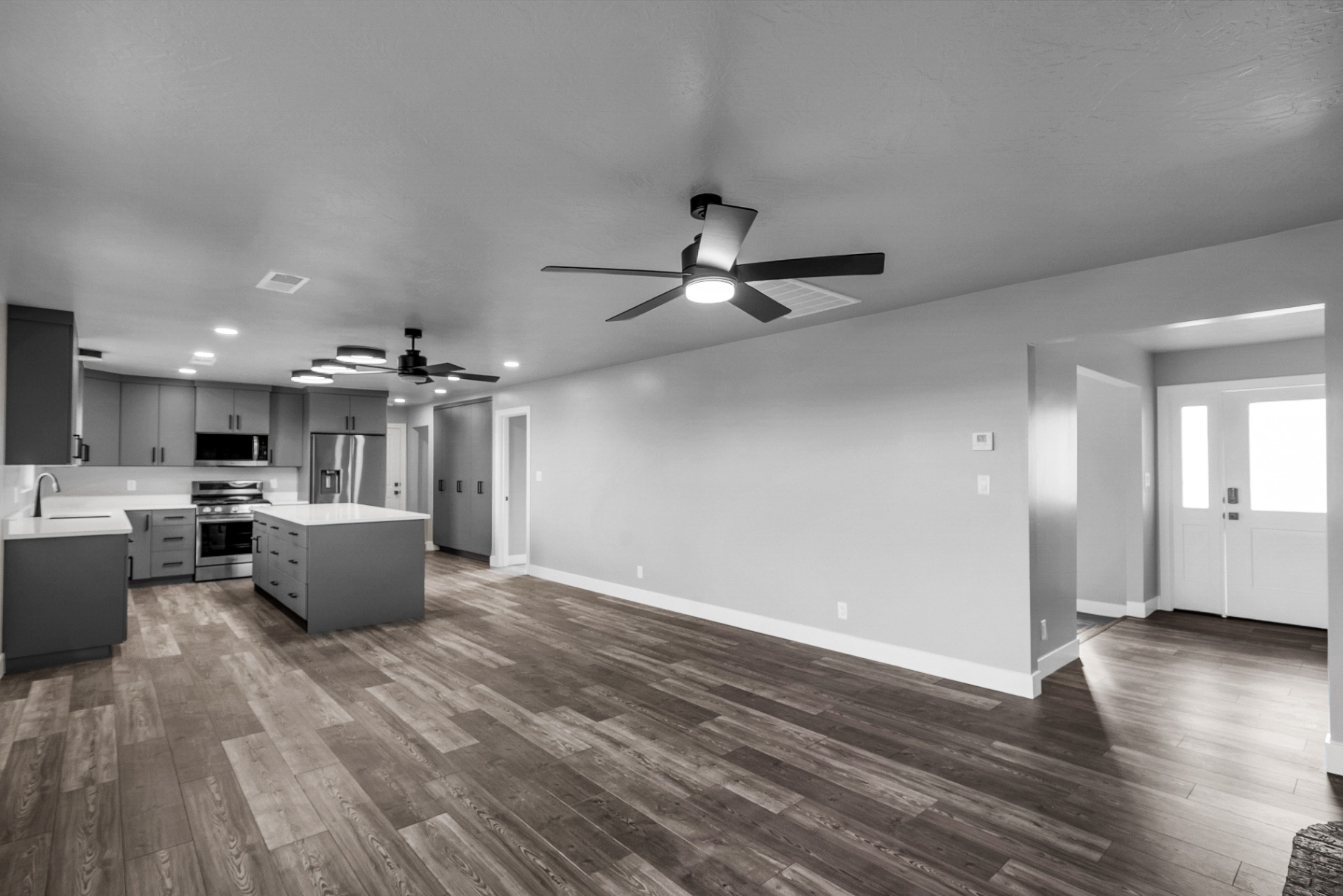

Prioritize three things above everything else: a builder’s reputation with past clients, a written contract that spells out scope and payment in detail, and proof of active licensing and insurance. Start today by pulling a short list of three to five candidates from your local home builders’ association, referrals, and model-home visits, then ask each one for references, license numbers, and a sample contract before you say yes to anything.
TL;DR:
- Verify licensing and insurance through official state and insurer checks; the time required and information available vary.
- Selecting a builder whose subcontractors are consistent and who maintains organized, clean job sites indicates reliability and quality workmanship.
- Contract terms should specify scope, payment milestones, change procedures, and allowances to prevent cost overruns and disputes during construction.
- Budgeting should consider a project-specific contingency and site costs such as permits and land. The appropriate reserve depends on the scope and identified risks.
- Comparing three to five bids on identical scopes helps identify outliers and helps compare pricing for your project.
Prestigious Home Builders
Build With Clarity and Confidence
Prestigious Home Builders combines personalized design, clear collaboration, and transparent planning for custom homes and remodels in Utah.
Explore Prestigious Home Builders
How Do You Research and Short List Home Builders?
Your local home builders’ association can be a starting point. Membership alone does not establish quality or licensing, and pairing that list with the National Association of Home Builders’ vetting checklist gives you a structured way to compare candidates instead of guessing. Open houses and model-home tours are worth the Saturday morning, too. Seeing a builder’s actual work tells you more in twenty minutes than a glossy brochure ever will.
As you build your short list, filter for fit and watch for warning signs:
- Match the builder’s specialty (spec, semi-custom, or full custom) to your project. A production builder who churns out subdivision homes may not be the right fit for a one-off custom design.
- Check that portfolio photos match the finish level and style you actually want, not just impressive square footage.
- Treat vague marketing claims, missing physical addresses, or a portfolio that looks inconsistent from project to project as reasons to move on.
What Should You Look for During a Site Visit?
Model homes show you the sales pitch. Active job sites show you the truth. Walk both if a builder will let you, and look past the paint color to the bones of the house: framing squareness, flashing details around windows and rooflines, insulation coverage, and the quality of finish carpentry where two surfaces meet. Interior finishes can be a substantial part of construction cost, as discussed in this builder-selection guide, so cabinetry, trim, and paint quality deserve close inspection, not a passing glance.
On an active site, notice whether the same subcontractor crews show up project after project, or whether the builder seems to be rotating through whoever is available that week. Consistency signals a builder who has built real relationships with reliable trades.
- Ask to see how the builder handles a punch list. Vague answers are a red flag.
- Look for a clean, organized jobsite. Sloppy materials handling often correlates with sloppy workmanship.
- Ask who the foreperson is and how often the builder personally checks in on progress.
Pro Tip: Arrange any site visit with the builder and follow the site’s access and safety rules. Ask the appropriate professional to explain inspection items rather than entering unfinished cavities or attic spaces yourself.
What Contract Terms and Payment Schedule Protect You?
The contract is where good intentions either get locked in or quietly disappear. A thorough agreement should spell out the full scope of work, materials, drawings, price, and payment schedule, along with a clearly defined process for handling change orders. Discuss appropriate payment milestones and timing in the written agreement, and every allowance line item needs a dollar figure attached, not a placeholder.
Watch for these specifics before you sign anything:
- A detailed scope of work with drawings and material specs, not vague language like “standard finishes.”
- A written payment schedule with clear milestones and any deposits reviewed against the contract and applicable local rules.
- A written change-order process requiring signatures and price adjustments before extra work begins.
- Clear allowance amounts for items like flooring or fixtures, since underestimated allowances are one of the most common ways final costs balloon.
- Down payment limits and cancellation rights consistent with your state’s contractor guidance, California’s Contractors State License Board (CSLB) is an example source, not Utah legal guidance; confirm the rules applicable to your property with a qualified Utah adviser.
Reviewing a breakdown of construction contract types before you negotiate helps you recognize which payment structure actually protects you.
How Do You Verify a Builder’s License and Insurance?
Confirm licensing status directly with your state’s contractor licensing board and check for complaint history through the Better Business Bureau. Availability and review time vary; use the relevant official licensing source and treat complaint information as one part of due diligence.
- Request current certificates for general liability and workers’ compensation insurance. Discuss coverage and potential liability with the insurer or a qualified legal adviser rather than assuming a certificate resolves every risk.
- Ask about mechanics lien risk, and discuss appropriate lien-waiver procedures with the builder and a qualified local adviser.
- Get warranty terms in writing, including what’s covered, for how long, and who to call if something fails after move-in.
- Be skeptical of bids that come in far below competitors. An unusually low bid sometimes signals a builder who’s already behind on paying suppliers, which raises your lien risk down the line.
A quick due-diligence pass, like the contractor verification checklist from SzopaLabs, reinforces the same principle: verify before you sign, not after you’re mid-project.
How Do You Pick the Right Builder for Your Project?
Once you’ve narrowed your list to two or three finalists, rank them against the same criteria in the same order every time:
- Project fit — does their portfolio match your build type and style?
- References and workmanship — did past clients confirm quality and reliability?
- Contract clarity — is scope, pricing, and payment fully spelled out?
- Licensing and insurance — verified, current, and adequate for the project size?
- Timeline credibility — does their proposed schedule match realistic industry expectations?
- Price transparency — are allowances itemized, with no vague lump sums?
Bring a real interview list to your finalist meetings. Useful groupings include:
- Experience: How many years have you built in this area? How many homes like mine have you completed?
- Subcontractors: Do you use the same crews consistently? How long have you worked with your framer and electrician?
- Schedule: What’s a realistic timeline for this project, and what could delay it?
- Payments and change orders: How are draws structured, and what’s your process when a change order comes up?
- Warranties: What’s covered, for how long, and who handles a warranty call after year one?
Treat licensing, insurance, and contract red flags as pass/fail. Everything else, like communication style and price, gets weighted based on what matters most to you. Getting bids from three to five builders on an identical scope makes the comparison fair and surfaces outliers fast.
What Do Realistic Timelines and Costs Look Like?
Cost shares vary by market, land, design and finishes. The legacy article’s NAHB-attributed percentages have not been independently substantiated here and should not be treated as a Southern Utah budget formula.
Cost distribution depends on your finish selections and site conditions. Review finishes, rough-in work and framing in the actual estimate rather than assuming a universal ranking. Discuss a project-specific contingency for surprises, and ask your builder whether starting construction in a slower season might reduce subcontractor premiums. Reviewing a month-by-month custom home timeline before you sign helps you spot an unrealistic schedule before it becomes your problem.
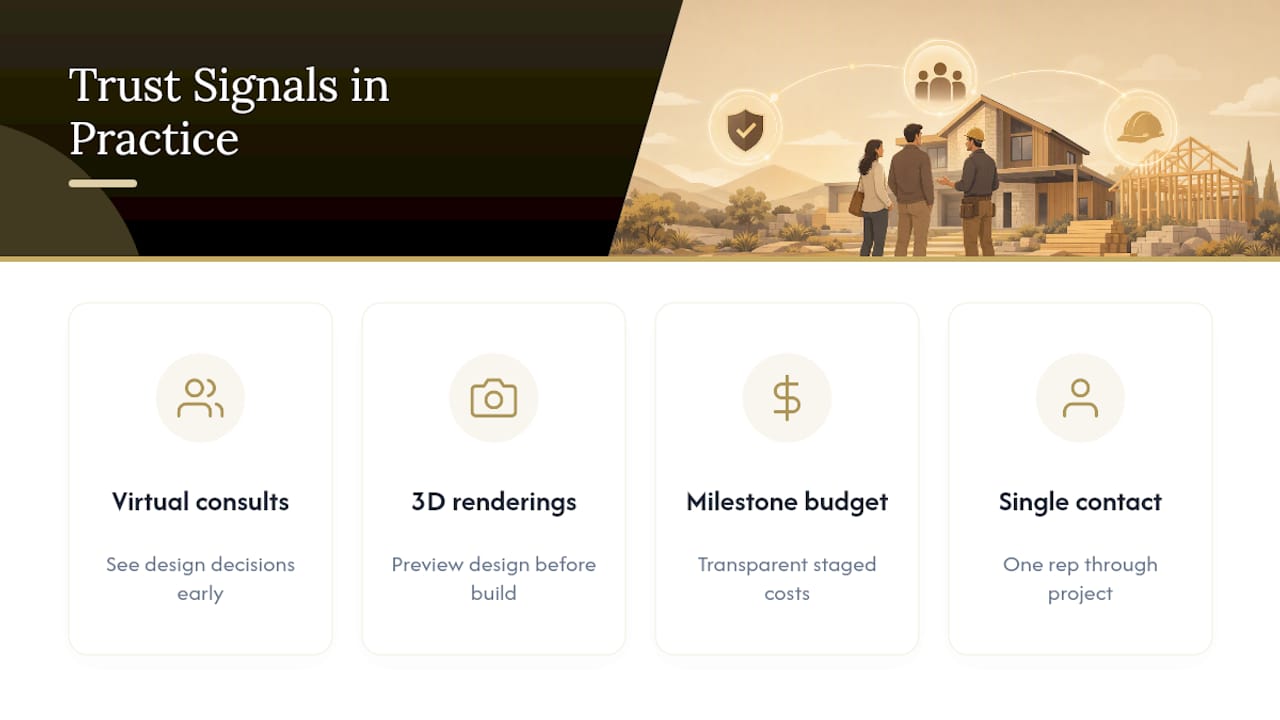
How Does a Reputable Builder Show These Trust Signals in Practice?
Look for builders who make their process visible instead of asking you to trust it blindly. Ask how design decisions are reviewed, how estimates and allowances are explained, and who communicates changes. Confirm whether virtual consultations, renderings or a single point of contact are included in your proposed scope; they should not be assumed for every project.
Is It Better to Pay More for an Experienced Builder?
Reliability outperforms discount pricing every time construction hits a snag, and it always hits a snag. That’s the entire point of the reference calls, the contract scrutiny, and the license checks outlined above: they’re how you find out which builder you’re actually getting before you’re locked in.
Ready to Compare Builders? Start With a Real Conversation
Some builders offer a single point of contact who walks you through design, budgeting, and construction using virtual consultations and 3D renderings, so you see the plan before you commit to it.
Whether you’re planning a new build, a kitchen remodel, or an ADU, the same vetting principles in this guide apply, and Prestigious Home Builders welcomes the scrutiny. Ask for references, request a sample contract, and compare the answers against what you’ve learned here. If a custom home is the goal, start with the custom home construction page to see current process details and request a consultation.
Sources
A phone call to three past clients tells you more than a hundred five-star reviews. Reviews can be curated. A direct conversation with someone who lived through the process cannot.
- Checklist for Finding and Hiring a Builder or Remodeler | NAHB
- Terms of Agreement (CSLB consumer guide)
The Wisconsin Builders Association recommends this same reference-first approach, and it works because past clients have nothing to gain by flattering a builder they no longer need anything from.
FAQ
Is $400,000 Enough to Build a House?
That amount is not a verified Southern Utah construction estimate. Whether it can cover your project depends on land, site work, design, size, finishes and current bids. Obtain a property-specific, line-item estimate and discuss contingency before assuming the budget is sufficient.
Is $300,000 Enough to Build a House?
That amount is not a verified Southern Utah construction estimate. Whether it can cover your project depends on land, site work, design, size, finishes and current bids. Obtain a property-specific, line-item estimate and discuss contingency before assuming the budget is sufficient.
Is $200,000 Enough to Build a House?
That amount is not a verified Southern Utah construction estimate. Whether it can cover your project depends on land, site work, design, size, finishes and current bids. Obtain a property-specific, line-item estimate and discuss contingency before assuming the budget is sufficient.
What Upgrades Should You Skip on a New Build?
Skip upgrades that are easy and affordable to change later, like light fixtures, faucets, or paint color, and save your budget for items that are expensive or disruptive to modify after move-in, like layout changes, structural framing, or rough-in plumbing locations. A builder who reviews your allowance list line by line, using a transparent, milestone-based process, can help you sort upgrade priorities before they become costly change orders.
How Many Builders Should You Get Bids From?
Aim for three to five builders using an identical project scope, which keeps the comparison fair and surfaces price outliers quickly. Sending your plans to significantly more than five builders is generally discouraged, since it spreads bidding effort thin and can discourage builders from putting together a serious, detailed quote.