
- Uncategorized
- September 16, 2025
Construction tasks such as lifting, repeated bending, and prolonged awkward positions can contribute to lower back discomfort. This article covers general jobsite ergonomics and when to seek care. Prestigious Home Builders is a construction company, not a medical provider; this is not diagnosis, treatment, or clearance to work.
This pain can come from standing too long, crouching, or using heavy machinery. Finding ways to ease back pain from heavy lifting is important. It’s not just about quick fixes but also about keeping the spine healthy long-term.
Report discomfort early and review the task with your supervisor. Reduce manual handling with mechanical aids, smaller loads, and suitable work heights. Back belts are not a substitute for hazard controls and should not be presented as proven injury prevention.
Consult a qualified healthcare professional about new, persistent, or worsening back pain. Treatment depends on assessment and individual risks; this article does not recommend a particular clinic, manipulation, acupuncture, or massage.
Understanding Construction-Related Back Pain
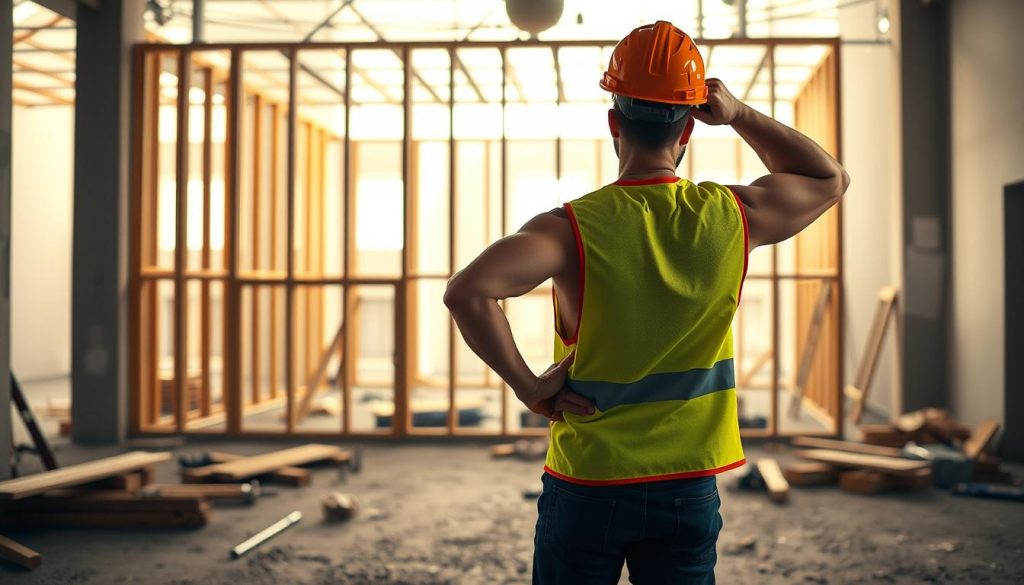
Construction work is tough on workers, often causing back pain. It’s key to know why and how to prevent it. Using ergonomic tips can help reduce injury risks.
Common Causes of Lower Back Pain in Construction Workers
Construction jobs are physically demanding. Activities like heavy lifting and bending can harm the back. These actions strain muscles and discs, causing pain.
Risks Associated with Heavy Lifting and Awkward Postures
Awkward lifting can increase physical demands. Plan the task, clear the route, and use mechanical assistance where possible; technique alone does not eliminate injury risk.
The Impact of Long-Term Exposure to Job Site Hazards
Construction hazards like machine vibrations and unstable surfaces harm workers over time. To prevent injuries, training and proper equipment are essential. Assessing risks on the job is also critical.
Ergonomic changes aim to reduce task demands. The legacy injury-rate figures had no identified study, population, or measurement method and cannot establish effectiveness.
| Jobsite factor | Practical review | Follow-up |
|---|---|---|
| Repeated lifting | Load size, frequency, lifting aids | Adjust task and monitor demands |
| Awkward postures | Work height and material placement | Reposition materials |
| Vibration and access | Equipment condition and routes | Supervisor-led hazard review |
Introducing ergonomics and educating workers on safe practices are key. They help reduce risks and protect workers’ health.
Preventive Measures for Construction Workers
Prevention planning focuses on reducing physical demands rather than promising that workers can avoid all back pain. Review manual handling, task rotation, work heights, and access to suitable equipment.
Adopting Proper Lifting Techniques
Before lifting, assess load size, grip, route, and whether equipment or help is needed. Keep manageable loads close, avoid twisting under load, and turn with your feet. Do not attempt a lift that exceeds your ability or a healthcare restriction.
Importance of Regular Stretching and Core Strengthening
General fitness may support physical capacity, but planks, yoga, and stretching are not suitable for every injury. Ask a qualified clinician whether an exercise program is appropriate; do not use this article as a rehabilitation prescription.
Ergonomic Solutions and The Right Equipment
Mechanical lifting aids, material carts, and adjustable work heights can reduce manual handling demands when selected and used correctly. Back braces should not be described as keeping workers safe or preventing injuries.
Immediate Steps to Take Following a Back Injury
After an injury, stop the task that triggered symptoms, move out of immediate danger if safe, and report the incident under workplace procedures. Serious symptoms require medical assessment rather than an online first-aid routine.
Seek emergency care for back pain with new loss of bladder or bowel control, numbness around the groin or saddle area, or new or progressive leg weakness. Significant falls or trauma also warrant urgent assessment. Severe pain, fever, or inability to walk safely requires prompt medical advice.
When to Seek Professional Medical Attention
A qualified clinician can assess persistent, worsening, or activity-limiting pain and determine whether tests or treatment are needed. Do not self-diagnose a herniated disc or substitute a chiropractic appointment for emergency assessment.
Initial Home Care: Ice vs. Heat Treatment
Ice or heat may be soothing for some people, but there is no universal switch-over time for every injury. Ask a clinician about suitability, protect the skin, and avoid burns or cold injury, especially with reduced sensation or circulation.
Initial precautions do not guarantee recovery or prevent disability. Follow the assessment plan and seek reassessment if symptoms worsen or new symptoms develop.
How to Fix Lower Back Pain from Construction
Managing symptoms begins with an assessment when needed and a review of work demands. There is no single exercise, alignment correction, or treatment that fixes every cause of back pain.
A clinician or physical therapist may recommend individualized exercises after assessment. The appropriate movement, intensity, and progression depend on symptoms, function, and the demands of the job.
Pain does not by itself show that the spine is misaligned. Do not attempt spinal adjustments or assume yoga will correct an injury; discuss treatment choices with a qualified clinician.
Physical therapy, massage, acupuncture, or manipulation may be discussed in clinical care, but benefits and risks vary. This construction article does not establish their effectiveness, mechanism, or suitability for an individual.
- Review duties and lifting demands with the supervisor.
- Discuss symptoms and treatment options with a qualified clinician.
- Follow individualized restrictions and seek reassessment when necessary.
A practical plan combines appropriate healthcare with reduced jobsite demands. Neither exercise nor treatment guarantees pain relief, recovery time, or a safe return to heavy work.
Chiropractic Care for Construction Workers
Some people consider chiropractic care for back pain. A medical assessment is important when symptoms are new, severe, persistent, or associated with injury; chiropractic care is not a universal first step.
Spinal manipulation is not an alignment repair or a proven way to prevent all future back problems. Ask a qualified clinician about possible benefits, contraindications, and alternatives.
An individualized care plan should consider medical history, symptoms, function, and work requirements rather than assuming a single alignment problem is the cause.
Early reporting and assessment can help identify appropriate next steps, but chiropractic visits cannot be promised to prevent chronic pain or avoid surgery.
Persistent or recurrent pain calls for reassessment by a qualified healthcare professional. Return-to-work duties should reflect clinical advice and the actual job, not a promise of pain-free performance.
Physiotherapy Options for Back Pain Management
Physical therapy may be part of an individualized care plan after evaluation. Goals may include movement confidence, function, and task tolerance; results vary.
A rehabilitation program should be tailored by a qualified professional. Ask how exercises relate to your symptoms and job demands, how to progress, and when to stop and seek advice.
Manual therapy and ultrasound are not universally appropriate or reliably rapid solutions. Discuss the evidence, risks, and alternatives with a qualified clinician instead of following promotional treatment links.
Rehabilitation goals and timing depend on the person. Guided exercise may be considered, but it does not guarantee immediate relief or prevention of future injury.
Discussing Stretches with a Qualified Clinician
No stretch is best for every cause of lower back pain. A clinician can determine whether movement advice is appropriate, especially after trauma or with neurological symptoms.
Do not force painful positions or follow a generic online stretching routine as injury treatment. Ask for individualized instructions and clear stop criteria.
| Movement topic | What to ask a clinician | Safety consideration |
|---|---|---|
| Cat-cow | Is spinal movement suitable now? | Avoid forced range |
| Knee-to-chest | Does flexion suit my symptoms? | No prescribed frequency here |
| Child’s pose | Is this position appropriate? | Account for knee and back tolerance |
| Pelvic tilts | Is motor-control exercise indicated? | Individual instruction |
| Bird-dog | Is loaded balance work suitable? | Progress only as advised |
Exercise choices should be reviewed as symptoms change. A generic stretch list cannot establish injury prevention or better back function for every worker.
Maintaining Spinal Health On and Off the Job Site
Off-site habits may support general wellbeing, but cannot make demanding work injury-proof. Prioritize reasonable task demands and assessment of persistent symptoms.
Changes should be evaluated for comfort and function rather than promised improvements in productivity or quality of life.
General activity may support fitness; an injured worker needs individualized guidance rather than a standard strengthening routine.
Useful questions for a clinician or physical therapist include:
- Which movements are appropriate for my symptoms?
- How should activity be progressed?
- What symptoms mean I should stop and seek reassessment?
General wellbeing considerations can be discussed with a healthcare professional:
- Maintaining a healthy weight to reduce the strain on the back muscles and joints.
- Ensuring proper nutrition to keep the muscles and bones strong.
- Avoiding smoking and limiting alcohol consumption, as these habits can lead to poorer health outcomes and exacerbate pain symptoms.
These habits cannot ensure long-term freedom from pain. Employers still need to control physical hazards, and workers should follow individualized care advice.
Occupational Health Solutions for Construction Companies
Construction employers can review ergonomic risks and training with safety professionals. This is general employer guidance, not a claim that Prestigious Home Builders provides occupational medical services.
Teaching workers how to lift properly is key. It’s part of ergonomic tips for construction workers. Adjusting workspaces and encouraging breaks also helps. This makes the workplace safer and more efficient.
Suitable equipment can reduce some physical demands. Select aids for the load and route, train users, and maintain the equipment; injury prevention is not guaranteed.
| Work practice | Practical action | Boundary |
|---|---|---|
| Training | Review load handling and equipment | Does not replace hazard reduction |
| Lifting aids | Match equipment to loads and access | Maintain and train users |
| Work environment | Improve routes, lighting, and material placement | Reassess as site changes |
| Occupational health input | Arrange qualified advice where appropriate | Respect privacy and individual restrictions |
Conclusion
Construction-related back pain has many possible causes. Reduce jobsite demands, report injuries, and seek qualified care rather than looking for a guaranteed fix. MedlinePlus back pain information is a general educational resource, not an individualized treatment plan.
Training should address lifting aids, load planning, work heights, and incident reporting. Stretching alone is not an adequate safety program.
Treatment choices belong with qualified healthcare professionals. No particular therapy is essential for every worker, and this construction company does not diagnose or treat injuries.
Employers should review modified duties against any medical restrictions. Workers should not use pain reduction or completion of exercises as independent clearance for heavy work.
The goal is safer work and timely access to care, not a promise of a pain-free workforce.
FAQ
What are the common causes of lower back pain in construction workers?
Construction workers often get lower back pain from heavy lifting. They also get it from bending or twisting in awkward ways. Standing or crouching for a long time, machine vibrations, and accidents like slips and falls can also cause it.
What risks are associated with heavy lifting and awkward postures?
Heavy lifting and awkward postures can lead to muscle fatigue and joint stiffness. They can also cause repetitive strain injuries and acute injuries. These can lead to chronic back pain or more serious musculoskeletal disorders.
How does long-term exposure to job site hazards impact back health?
Long-term exposure to job site hazards like machine vibrations and falls can damage the spine and muscles. This can lead to chronic back conditions.
What proper lifting techniques can help prevent back injuries?
To prevent back injuries, construction workers should bend their knees and keep the load close to their body. They should avoid twisting while carrying weights. Using teamwork and mechanical aids for heavy items is also a good idea.
Why are regular stretching and core strengthening important for construction workers?
Fitness and flexibility may support activity, but exercises do not guarantee injury prevention. After injury, ask a qualified clinician for individualized guidance.
What ergonomic solutions and equipment can alleviate back strain?
Mechanical aids, suitable work heights, and accessible material storage can reduce demands. Back belts do not replace these controls and are not a proven guarantee against injury.
When should a construction worker seek professional medical attention for back pain?
Seek emergency care for new bladder or bowel dysfunction, saddle-area numbness, progressive leg weakness, or serious trauma. Seek prompt medical advice for severe, persistent, worsening, or fever-associated pain.
How can ice versus heat treatment be used after a back injury?
There is no universal ice-to-heat timetable. Discuss suitability with a clinician, protect your skin, and do not let home care delay assessment of serious symptoms.
What are the benefits of spinal adjustments and manipulation for construction workers?
Spinal manipulation is not a guaranteed alignment correction or source of immediate relief. Discuss its evidence, risks, and alternatives with a qualified clinician; it is not appropriate for every condition.
How can a custom rehab exercise program help with back pain management?
An individualized rehabilitation plan may support function after assessment. Exercises and progression depend on the person and do not guarantee complete recovery or work readiness.
What manual therapy techniques can help with back pain relief?
Manual therapies may be discussed as part of clinical care, but results and suitability vary. They should not be presented as reliably healing injuries or providing significant relief for everyone.
Which stretches are best for alleviating lower back pain?
No stretch is best for all back pain. Ask a qualified clinician whether stretching is suitable and how to perform any recommended movement safely.
How does exercise contribute to building back resilience?
Appropriate exercise may support strength and activity tolerance. It does not make workers immune to injury or replace safe job design.
Why are lifestyle choices important in preventing back pain?
General health habits may support wellbeing, but are not a cure or certain prevention strategy. Discuss individual health needs with a clinician.
How can implementing ergonomic work practices improve occupational health?
Ergonomic reviews can identify opportunities to reduce demands; effectiveness depends on implementation and task conditions, not a guaranteed productivity or injury outcome.
What injury prevention techniques should workers be trained in?
Workers should be trained in proper body mechanics and safe lifting procedures. They should also learn how to use personal protective equipment and respond to emergencies to mitigate risks and enhance safety.
Construction Coordination
For construction coordination—not medical care—see General Contractor services, About Prestigious or Contact. Seek a qualified health professional for individual symptoms, treatment and return-to-work decisions.
References and Verification
References support general planning distinctions, not individual medical, financial, legal, engineering or property-specific approvals. Confirm the current documents applicable to your circumstances.