
Utah homeowners can investigate Rocky Mountain Power’s Wattsmart Homes and Enbridge Gas’s ThermWise if their service address and project meet the applicable rules. U-factor is only one eligibility condition; heating or cooling equipment, home type, installation date and documentation can also matter. ENERGY STAR certification, utility eligibility and local code compliance are separate checks. Request the exact product’s NFRC ratings before ordering.
Use program documents tied to your installation date:
- Rocky Mountain Power Wattsmart: The Utah window page reviewed lists per-window rebates for qualifying installations under rules that distinguish installations before February 27, 2026. Do not use the article’s former per-square-foot Tier 2 description as a current rule.
- Enbridge ThermWise: The reviewed 2026 Utah single-family window application covers qualifying installations from January 1 through December 31, 2026; other dates require the applicable program documents.
- Federal Energy Efficient Home Improvement Credit: IRS guidance states that the credit ended for property placed in service after December 31, 2025. Do not include it in a 2026 window-installation budget.
- State incentive resources: Use summaries to locate programs, then verify eligibility with the administering utility or agency.
Pro Tip: Demand the NFRC label and the exact U-factor and SHGC values in writing before you order. Marketing terms like “triple-pane” or “Low-E” are not substitutes for a certified rating.
Which Utah rebate programs cover window replacement?
Rocky Mountain Power’s Wattsmart Homes and Enbridge Gas’s ThermWise are programs to investigate, not benefits most Utah homeowners can assume they qualify for. Confirm service territory, equipment, home type, installation date and product requirements directly with the administrator.

Rocky Mountain Power Wattsmart: The reviewed Utah page lists U-factor ≤ 0.22 and per-window rebates differentiated by qualifying heating or cooling systems. It restricts eligibility to qualifying existing single-family homes, excludes manufactured homes and directs applicants with installations before February 27, 2026 to different rules. Consult the official page and full qualifications for your installation date.
Enbridge ThermWise operates within the natural gas utility service area and has its own eligibility rules and product requirements. If your home is heated by Enbridge gas, check the ThermWise program page directly, because the rebate amounts and application timelines differ from Wattsmart.
| Dimension | Rocky Mountain Power Wattsmart | Enbridge ThermWise |
|---|---|---|
| Rebate calculation | Reviewed Utah page uses per-window amounts by eligible heating/cooling category; check installation-date rules | Reviewed 2026 Utah single-family form uses a per-square-foot calculation; check the applicable year and home category |
| Eligible customers | Qualifying Utah customers and existing single-family homes; equipment, rate-schedule and other restrictions apply | Qualifying utility customers and projects meeting the applicable form’s conditions |
| Product requirement | Reviewed page specifies U-factor ≤ 0.22; verify all product and project conditions | Reviewed 2026 single-family form specifies U-factor ≤ 0.22; verify all conditions |
| Application timing | Reviewed page specifies submission within 180 days of qualifying service completion | Reviewed 2026 form specifies postmark within six months of installation |
| Federal credit | Section 25C is not available for property placed in service after December 31, 2025 | Section 25C is not available for property placed in service after December 31, 2025 |
- Verify your utility service area before purchasing windows. A home on the border of Rocky Mountain Power and another provider may not qualify for Wattsmart.
- State incentive summaries may help identify programs, but use the administrator’s applicable documents to verify availability, amounts and deadlines.
- Rebate tiers and dollar amounts change. Always confirm current figures on the utility’s official program page before you order.
Who qualifies for Utah window rebates?
Eligibility differs by program and installation date. Confirm every applicable condition before ordering; incomplete documentation or an ineligible product can prevent approval.
Eligibility checklist:
- You are an active residential customer of the utility offering the rebate (Rocky Mountain Power or Enbridge Gas).
- The home is an existing structure. New construction may have different rules or separate programs.
- Confirm the specific program accepts your home type. The reviewed Wattsmart Utah window offer is for qualifying existing single-family homes and excludes manufactured homes; do not infer eligibility for other home types.
- The windows being replaced are in the home’s conditioned envelope (not garages or unconditioned outbuildings).
- Replacement windows meet every product requirement in the applicable program documents. Do not assume that ENERGY STAR certification alone qualifies a window or is required identically by both programs.
Documents to check against your program’s requirements before installation:
- Your utility account number (Rocky Mountain Power or Enbridge).
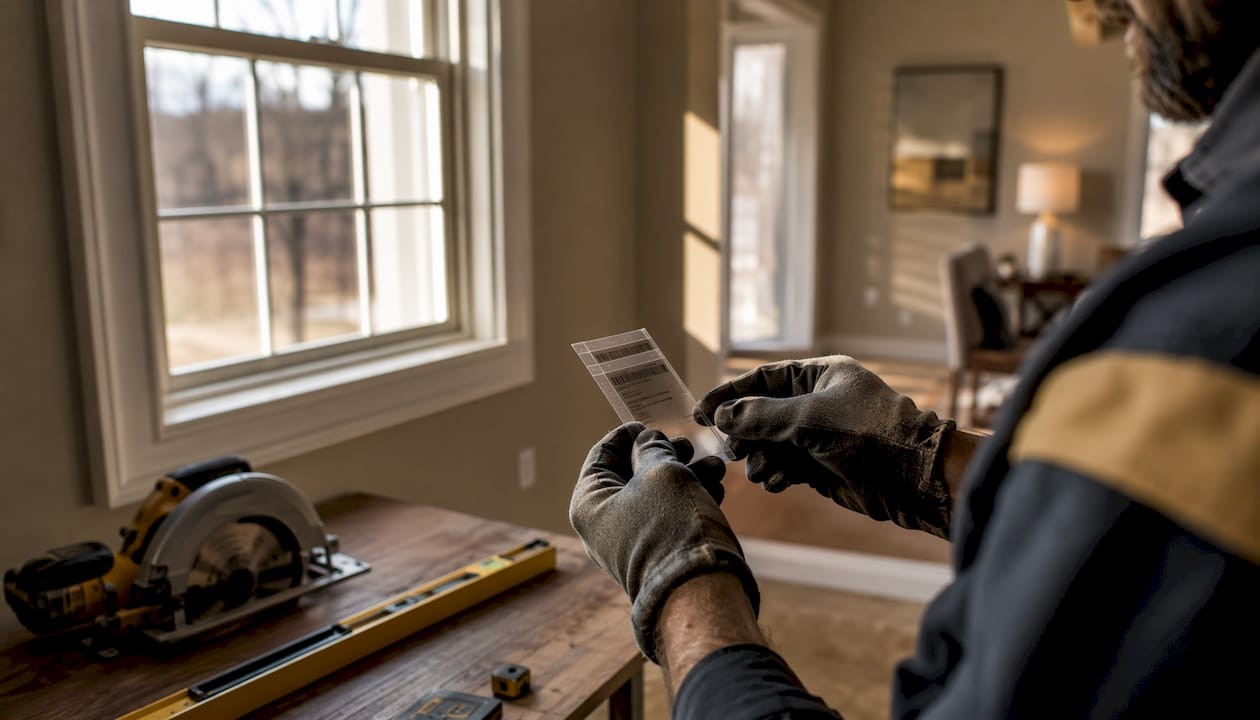
- NFRC labels from every installed window unit. Photograph them before the installer removes them.
- An itemized contractor invoice that lists the window manufacturer, model number, quantity, dimensions, and installed price per unit.
- Proof of ENERGY STAR certification for the specific product and climate zone.
- Completed program application form from the utility’s website.
Application timing is program-specific. Both Wattsmart and ThermWise require submission within a set number of days after installation. Verify that deadline with your utility before scheduling the install, because a late application is typically rejected regardless of product quality.
How much can you actually save with rebates and lower energy bills?
Potential benefits include an approved utility incentive and changes in heating or cooling costs. Neither is guaranteed: eligibility determines the incentive, while existing windows, installation, climate and household operation affect energy results.
A worked rebate example for a Wasatch Front home:
For an illustrative 10-window project, first establish which program rules apply to the address and installation date.
- Under a per-window offer, multiply the number of eligible windows by the applicable approved rate.
- Under a per-square-foot offer, use the program’s defined measurement method rather than assuming glass area is the qualifying area.
- Confirm every eligibility condition and the administrator’s processing guidance; approval and payment timing are not guaranteed.
The reviewed Wattsmart Utah page uses per-window amounts, so the former 150-square-foot Tier 2 calculation should not be used as current Wattsmart guidance.
On the energy bill side: Do not use the source’s unsourced 13% figure as a Utah project forecast. Savings depend on the existing windows, replacement ratings, installation, orientation, shading, weather, utility rates and HVAC operation. Request an assessment using your home’s conditions, and use manufacturer documentation rather than assuming a 10–15-year service life.
Tax-credit timing and records:
- The IRS Energy Efficient Home Improvement Credit guidance states that Section 25C ended for property placed in service after December 31, 2025. Do not budget this credit for a 2026 installation.
- For an eligible historical installation, consult the applicable tax-year instructions about qualifying product costs, excluded installation labor, rebates, limits and manufacturer documentation. Do not calculate a credit from the invoice total alone.
- Preserve product records, invoices and installation dates, and ask a qualified tax adviser about historical filing eligibility.
The source’s approximately $400-per-window estimate, $150-to-over-$2,000 range and $4,000 ten-window total are UNVERIFIED LEGACY EXAMPLE figures, not current Utah installed prices. Obtain itemized local quotes covering product specifications, removal, flashing, finish repairs, access, disposal and any permit costs. Deduct only incentives confirmed for the project; do not include Section 25C for installations after December 31, 2025.
What window specs should Utah homeowners actually buy?
Compare certified whole-product U-factor, SHGC and visible transmittance rather than marketing terms alone. The following regional considerations are design guidance, not local code limits or guaranteed rebate qualifications. Confirm the address’s climate zone, applicable code and any program requirements separately.
Wasatch Front and northern Utah
A low U-factor can reduce heat transfer in heating-dominated conditions, but balance performance, installed cost and comfort goals. ENERGY STAR Version 7.0 includes multiple Northern-zone qualification pathways, so U-factor ≤ 0.22 is not the complete certification rule. Select SHGC using orientation, shading and seasonal loads rather than a universal 0.30–0.40 target. North-facing windows can receive diffuse and seasonally direct sunlight.
Southern Utah (St. George, Washington County, Iron County)
Solar heat control can be important in southern Utah, but St. George, Washington County and Iron County should not be treated as one uniform climate. Select SHGC and U-factor for the actual site, elevation, exposure, shading and seasonal loads; 0.25 is not a universal requirement. Review manufacturer exposure limits, frame finishes and warranties. For more on high-desert design priorities, consider the complete enclosure and shading strategy.
High-altitude communities
Give the manufacturer the manufacturing, transport and installation elevations and request an approved IGU configuration. Pressure compensation, glass design and gas retention are product-specific; there is no universal 6,000-foot trigger or guaranteed seal-failure prevention method. Compare whole-product ratings, exposure suitability and warranties rather than predicting seal life from frame material alone.
Key product features that actually move the needle:
- Low-E coatings: Coating options affect heat transfer, solar gain and visible light differently; compare the exact unit’s certified U-factor, SHGC and visible transmittance.
- Gas fills: Performance depends on the gas, cavity width, glazing configuration and manufacturing quality; compare rated products and installed prices rather than assuming krypton pays for itself.
- Frame material: Thermal breaks, frame design and the complete unit matter. Compare certified whole-product ratings, maintenance and exposure suitability rather than relying on a material ranking.
- NFRC label: The window ratings on the NFRC label give you U-factor, SHGC, and visible transmittance (VT) in verified numbers, not marketing claims.
Design guidance: Select U-factor and SHGC together for the site, orientation, shading and seasonal heating and cooling needs. A solar-gain strategy that helps in winter may increase summer cooling loads.
Pro Tip: Compare dual- and triple-pane options using certified ratings, installed price, comfort priorities and a site-specific energy estimate. Pane count, Low-E coatings and gas fill do not guarantee rebate eligibility or a particular payback. Evaluate St. George and Cedar City separately rather than treating their climates as equivalent.
How to apply for Utah window rebates, step by step
Application steps and timing vary by program. Check whether preapproval, contractor participation or other prerequisites apply before ordering.
- Confirm your utility and program eligibility before purchasing. Log into your Rocky Mountain Power or Enbridge account and verify your service address qualifies for Wattsmart or ThermWise.
- Select windows for the actual address and program. Confirm the applicable ENERGY STAR climate zone where certification is relevant, local code requirements and the utility’s complete criteria. Put the agreed product ratings and model information in writing.
- Obtain the NFRC label data for your specific product before installation. Ask the contractor or supplier for the product model number and NFRC-certified U-factor and SHGC values.
- Photograph every NFRC sticker before the installer removes them. These are your primary proof of product qualification.
- Collect an invoice and supporting records that meet the specific program’s requirements. Request manufacturer, model, quantity, dimensions and costs where required; do not assume every utility uses the same invoice format.
- Submit the completed application to your utility within the stated deadline. Attach the invoice, NFRC documentation, and ENERGY STAR certification proof.
- Retain originals and digital copies for the utility application, warranty and project records. A historical federal tax claim requires the applicable tax-year records; Section 25C does not cover property placed in service after December 31, 2025.
Common pitfalls that delay or kill rebates:
- Missing or discarded NFRC stickers (photograph them before removal, every time).
- Contractor invoices that list “windows” as a single line item without model numbers or dimensions.
- Assuming a climate-zone label alone establishes eligibility instead of checking the exact model’s ratings and every applicable program condition.
- Submitting the application after the utility’s deadline.
- Failing to verify the exact product’s certification where required and its compliance with the program rules for the installation address and date.
Clarify in writing who will collect documentation and submit the application. Do not assume the installer provides application services or guarantees approval.
Choosing an installer who won’t cost you your rebate
Poor installation can cause leakage, water intrusion and performance problems. NFRC ratings describe standardized product performance, not a promise of installed energy savings. Follow manufacturer instructions and applicable requirements for support, flashing and air sealing.
Questions to ask every contractor before signing:
- Will you provide an itemized invoice listing manufacturer, model number, quantity, and dimensions for each window unit?
- Will you preserve and photograph NFRC labels before removal?
- Can you identify the exact supplied models, certified ratings and any certification required for this address and incentive program?
- Do you handle rebate application submission, or is that my responsibility?
- What is your flashing and air-sealing process around the rough opening?
Red flags:
- Contractor cannot produce NFRC documentation or product spec sheets.
- Invoice is a single lump sum with no line-item detail.
- No written scope of work listing U-factor and SHGC values.
- Bid is significantly lower than others with no explanation of what is excluded.
- Contractor discourages you from keeping NFRC stickers.
Documentation to retain after installation:
- Photographs of NFRC stickers on every installed unit (taken before removal).
- Final itemized invoice with model numbers and dimensions.
- Permit records if your municipality required a permit for the replacement.
- ENERGY STAR product certification printout for the specific model.
- Utility rebate application confirmation number and submission date.
Pro Tip: Before work begins, agree on a written documentation checklist and assign responsibility for each item. Providing a planning resource is not evidence that a contractor will satisfy utility requirements.
Key Takeaways
Choose windows using certified ratings, site conditions, installation quality and project goals. Check every utility requirement for the installation date; neither U-factor nor ENERGY STAR certification alone guarantees a rebate or a particular energy saving.
| Point | Details |
|---|---|
| Compare certified ratings | Evaluate whole-product U-factor, SHGC and visible transmittance; certification, code and utility eligibility are separate checks. |
| Check the applicable utility offer | Verify address, home type, equipment, installation date, product rules and documentation before purchasing. |
| Treat federal credit guidance as historical | Section 25C ended for property placed in service after December 31, 2025; do not include it in a 2026 installation budget. |
| Specify for the actual site | Orientation, shading, elevation and seasonal loads matter; regional examples are not universal numeric requirements. |
| Confirm the contractor’s scope | Ask who provides product records, invoices, permit coordination and application assistance; obtain responsibilities in writing. |
When window replacement is the smart move versus targeted improvements
A useful planning question is whether full replacement offers sufficient benefit compared with repairs, storm windows, shading or air-sealing work.
Fogging between panes, frame deterioration or persistent drafts warrant diagnosis, not an automatic full-replacement decision. Depending on the cause, glazing replacement, hardware repairs, air sealing or full-unit replacement may be appropriate. Compare repairability, warranty coverage and written costs; these symptoms do not establish financial payback.
If existing windows are serviceable, compare targeted shading, cellular shades, weatherstripping and repairs with replacement. Costs and comfort effects depend on the home and the cause of discomfort; do not assume these measures close most of the gap or cost a fixed fraction of replacement.
Calculate net cost using only incentives confirmed for your project. The source’s 20–30% incentive coverage and ten-year replacement advantage are unsupported and should not guide a purchase. Section 25C does not apply to property placed in service after December 31, 2025. Compare alternatives using written prices and a site-specific estimate of annual savings.
Evaluate product ratings together with orientation, shading and seasonal loads. A window’s certified rating does not change with orientation, but its effect on home comfort and energy use can. Select specifications for each exposure without assuming a universal performance ranking.
Questions for Prestigious Home Builders about window projects
A utility application must satisfy the applicable program’s product, customer, project and documentation conditions. Ask the administrator which records are required and confirm who will provide them; using a contractor does not itself establish eligibility.
If discussing windows as part of a broader renovation with Prestigious Home Builders, confirm service availability for your address and whether the proposed scope includes window supply, installation, product records, invoices, permit coordination and application assistance. These responsibilities should be documented in the agreement; utility approval and payment cannot be promised.
Contact Prestigious Home Builders to ask about assessment availability, any fees and the proposed window scope. Keep utility account information private and confirm incentive eligibility with the utility before purchasing.
Useful sources to bookmark
These are the official pages worth saving before you start shopping or applying.
- ENERGY STAR Residential Windows, Doors & Skylights: Check the applicable climate zone and exact model’s certification. Certification criteria are not local building code, and general savings estimates are not a forecast for your home.
- ENERGY STAR Windows and Storm Windows: Buyer guidance on U-factor vs. SHGC by climate and orientation, plus installation tips. Essential reading before you finalize specs.
- National Fenestration Rating Council (NFRC): The authoritative source for understanding what the label numbers mean and how to verify a product’s certified ratings. Use this to cross-check any window a contractor proposes.
- Efficient Windows Collaborative — Window Ratings: Plain-language explanations of U-factor, SHGC, and visible transmittance ranges, useful for comparing products before you visit a showroom.
- IRS Energy Efficient Home Improvement Credit: Historical eligibility and filing guidance. Section 25C ended for property placed in service after December 31, 2025; it is not a prospective 2026 window incentive.
- Rocky Mountain Power Wattsmart Utah windows: Check the full qualifications and installation-date rules. The reviewed page uses per-window amounts and links separate rules for installations before February 27, 2026.
- Enbridge ThermWise program page: Search “Enbridge ThermWise Utah” for the current program page. Availability and amounts depend on your service territory.
- State energy resources: Use state summaries to identify potential programs, then verify availability and eligibility with the administering utility or agency. Do not treat a summary as confirmation of an active benefit.
Rebate amounts, application deadlines, and product requirements change with each program cycle. Verify current figures on the utility’s official page before signing a purchase agreement or scheduling installation.
References and Verification
These references support the planning distinctions above, not a project-specific approval, incentive award or financial outcome. Verify the rules and documents applicable to your address, installation date and agreement.
- Reference 1: wattsmarthomes.com
- Reference 2: www.enbridgegas.com
- Reference 3: www.irs.gov
- Reference 4: www.irs.gov
- Reference 5: www.energystar.gov
Plan the Next Step
Explore Exterior Remodeling and request a consultation for your proposed construction scope. For changes across several rooms, explore Full Home Remodeling.