
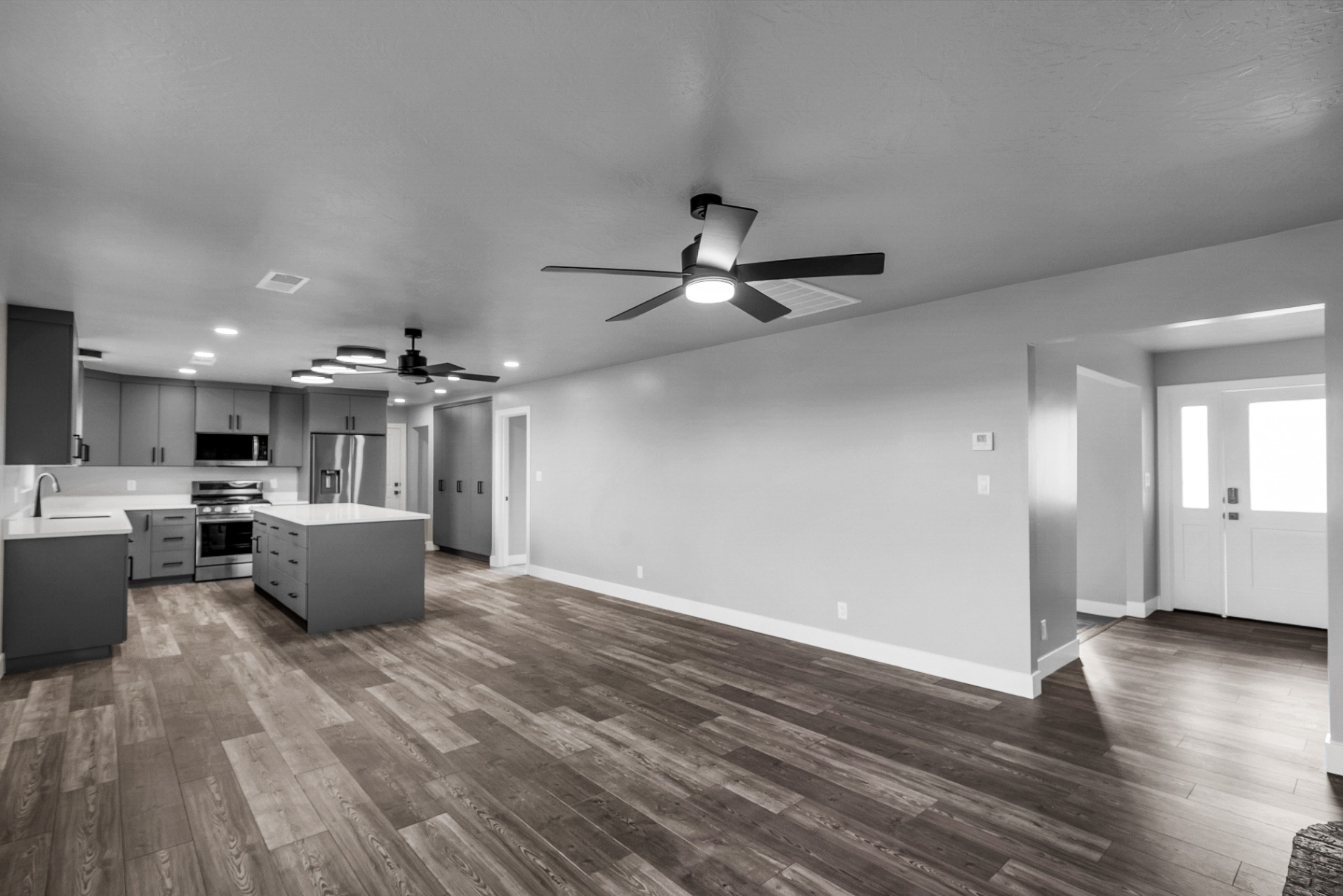
Solid Surface Shower Walls: Types, Costs and Installation

Solid surface shower walls are large, factory-made panels that cover your shower enclosure with few or no grout lines. They are made from mineral fillers, pigments and acrylic or polyester resins. Most buyers pick them for easy cleaning, a seamless look and a fast install. The right panel depends on your budget, the look you want and the condition of the wall behind it. This guide covers the main types, what they cost per square foot, how they go in and how to keep them looking new.
TL;DR
- Solid surface panels are engineered from mineral fillers, pigments and resins. Large sheets mean far fewer joints than tile.
- Cultured marble is a related, usually lower-cost cast composite. It is grout-free and comes in panels with a protective gel coat.
- One buyer’s guide lists installed costs of $50 to $100 per square foot for solid surface and $20 to $60 for cultured marble. Your total depends on panel size, thickness, finish and the wall prep.
- Joints, corners and plumbing openings still need proper sealing. The wall behind the panel must be flat, sound and dry.
- Clean with mild soap and water. Skip abrasive scrubbers and harsh chemicals.
Table of Contents
- What solid surface shower walls are
- How groutless walls work
- Why homeowners choose solid surface walls
- Cultured marble shower walls vs. solid surface
- What solid surface shower walls cost per square foot
- How solid surface shower walls are installed
- Cleaning and caring for panel walls
- Choosing the right panel for your bathroom
- Plan your shower remodel with us
- FAQ
- Sources
What solid surface shower walls are
A solid surface shower wall is a sheet of engineered material, not a coating on a board. In the case of Corian, the material is solid throughout rather than coated or laminated, so color, texture and pattern run all the way through. That matters in a shower, because a light scratch can be sanded out instead of showing a different layer underneath.
The manufacturer describes its surface as nonporous, easy to clean, and resistant to the growth of mold, mildew and bacteria. Its shower walls have no grout lines to scrub. Other makers of solid surface wall panels describe similar properties, though specific products differ, so check the data sheet of the exact panel you are considering.
The word “solid surface” gets used loosely, so here is how the categories line up.
| Material | What it is | Typical look | Grout lines |
|---|---|---|---|
| Solid surface (acrylic or polyester resin with mineral fillers) | Engineered sheet, solid through the thickness | Solid colors, stone-like patterns, milled textures | Few; joints are bonded and sealed |
| Cultured marble | Cast polyester resin and fillers with a clear gel coat | Marbled or solid colors with a glossy finish | None; panels are grout-free |
| Acrylic or fiberglass kits | Molded or thermoformed sheet | Simple, often tile-patterned | None, but seams at panel edges |
| Porcelain or stone slabs | Large-format ceramic or natural stone | Realistic stone or concrete looks | Few, with slab joints |
Groutless shower walls, the term many shoppers use, are large-format panels or slabs that cover the enclosure without visible grout lines. Solid surface, cultured marble and porcelain slabs all fit that description.
How groutless walls work
Grout is the weak point of a tiled shower. It is porous, it stains and it cracks. A panel system replaces dozens or hundreds of small joints with a handful of large ones.
That does not mean no sealing. Large panels can reduce visible joints compared with tile, but joints, corners and plumbing penetrations must be properly sealed, and the wall must be properly prepared. A panel is only as watertight as its joints and its edges.
On a Corian-type install, the process uses a color-matched joint adhesive at the panel edges. The installer then applies silicone caulk in the bottom chamfers to make the joint watertight. The result reads as one continuous surface from a few feet away. Corian also describes its shower pan and surround as visibly seamless, and says pans can be made to customer-provided dimensions, colors and drain locations.

Why homeowners choose solid surface walls
Easy cleaning
No grout means no grout lines to scrub. A smooth, nonporous surface wipes down quickly. If you have ever fought mildew in the corners of a tile shower, this is the main appeal.
Fewer leak paths
Every grout joint in a tile shower is a place where water can find a way in over the years. Fewer joints means fewer places to monitor. The panel itself still depends on a well-built wall and well-sealed edges, which is why the substrate matters as much as the surface. Our build-first checklist for preventing wet room leaks covers what sits behind the finish.
Repairable surface
Because a solid sheet has the same material all the way through, light scratches on a true solid surface can be repaired by sanding. Cultured marble has a gel coat on top, so it needs a gentler approach, covered in the care section below.
A faster install
A three-piece cultured marble system, with one back panel and two side panels, is set with construction adhesive and 100% silicone. One manufacturer estimates 2 to 4 hours per shower versus 3 to 5 days for ceramic tile. Treat those hours as the setting time for panels on a ready wall, not the whole remodel. Demolition, plumbing changes and wall repair come first.
Design flexibility
Solid surface can be cut, routed and shaped. Some fabricators mill patterns into the sheet. Pans can be made to custom sizes. That makes it a good fit for odd-sized alcoves or a custom shower footprint.
Cultured marble shower walls vs. solid surface
Cultured marble is the option many readers ask about. It is a cast composite of polyester resin, catalyst, fillers and pigments, coated with a clear protective gel coat. Despite the name, it is not quarried stone. The industry association says it costs substantially less than quarried marble and resists denting, chipping, abrasion and staining with normal use and proper maintenance.
A manufacturer brochure adds that cultured marble is grout-free, has a non-porous surface, never needs sealing and comes in panels 3/8 inch and 3/4 inch thick.
Here is how to think about the choice:
- Choose cultured marble when you want a smooth, glossy, grout-free look at a lower installed cost, and you plan to clean it gently.
- Choose solid surface when you want color and pattern through the full thickness, a repairable surface, custom pans or a more architectural look.
- Choose porcelain or stone slabs when you want a natural stone appearance and are comfortable with a more specialized install.
The finish matters most to the day-to-day. A glossy gel coat shows hard-water spots and responds badly to abrasives, so be honest about how you will clean.
What solid surface shower walls cost per square foot
Prices vary by region, panel thickness, finish and how much prep the wall needs. One 2026 buyer’s guide lists $50 to $100 per square foot installed for solid surface and $20 to $60 for cultured marble. A separate guide reports $50 to $120 per square foot installed for solid surface panels in its market and notes that costs vary by market. Treat all of these as planning ranges and get a written quote for your own bathroom.
Here is what that means on a typical alcove shower. Say the three walls add up to about 100 square feet of panel area. At $50 to $100 per square foot, that is roughly $5,000 to $10,000 for solid surface. At $20 to $60, cultured marble lands around $2,000 to $6,000. These are simple multiplications of the published ranges, not a quote.

What a Corian-type wall estimate should include
When you collect a price for a premium branded solid surface wall, ask what the line item covers. A clear estimate lists:
- Panels, including thickness, color and any milled pattern.
- Fabrication and templating, since many solid surface walls are cut to your measurements.
- Joint adhesive, silicone and trim.
- Cutouts for valves, shower heads, niches and grab bars.
- Demolition and disposal of the old tile or surround.
- Wall repair or new cement board and moisture protection.
- A shower pan, if you are replacing it.
The cost spread between two quotes usually comes from these items, not the panel price alone.
What changes the total
- Panel size and thickness. Thicker panels cost more, and so do large sheets that need careful handling.
- Finish and pattern. Solid colors cost less than veined or textured sheets.
- Wall condition. Rot, uneven studs or old tile adhesive add labor.
- Plumbing changes. Moving a valve or adding a second shower head adds work behind the wall.
- Niches, benches and curbs. Each detail adds fabrication and sealing.
Shower walls are one line in a bathroom budget. For context, our published range for a small bathroom remodel is $10,000 to $15,000, and you can see what is included on our bathroom remodeling page.
How solid surface shower walls are installed
Professional installation is where a good panel becomes a watertight wall. The steps below follow manufacturer guidance for Corian and cultured marble.
- Check the wall. Corian calls for level, sound walls with dry, clean, dust-free surfaces, and the same goes for the panel backs.
- Confirm the substrate. Corian’s specification tool allows panels over existing sound ceramic tile, moisture-resistant gypsum wallboard or cementitious board, using silicone sealant or flexible panel adhesive. Cultured marble can often go over existing tile when it is clean, flat and structurally sound, though clean, dry drywall or cement board is the stated best-practice base.
- Measure, cut and drill. Panels are cut to size and fixture holes are drilled. Swanstone says its panels can be trimmed to fit and glued over an existing surface.
- Apply adhesive. Silicone goes on the panel backs. Joint adhesive goes at the specified panel edges.
- Seal. The guidance specifies tooled silicone at the top, bottom and transitions. Sealing the junction with the shower tray or tub lip matters too, and panel guides also call for sealing sheet joints and cut edges.
- Cure. Let adhesives and silicone cure before the shower is used. Follow the product’s directions on timing.
A few practical notes. Measure twice, because panels are expensive to recut. Plan the valve and shower head positions before the panel is cut. And do not skip the sealant details, because the sealant is what keeps water out of the wall.
Can you put panels over tile?
Sometimes. Some manufacturers allow panels over sound, flat ceramic tile. But covering old tile hides whatever is wrong with the wall. If the tile is loose, the wall is soft or there has been a past leak, the panels will not fix it. A tear-out is the safer route in those cases, and a contractor can open a section to check.
Cleaning and caring for panel walls
Care is simple, but the dos and don’ts differ by material.
Solid surface (Corian guidance):
- For routine cleaning, use soapy water or common surface cleaners, then rinse and dry with a soft cloth.
- Avoid abrasive or mildly abrasive cleaners on high-gloss or dark surfaces.
- For hard-water marks, the same guidance says household limescale remover or vinegar can be left on for 2 to 4 minutes, then rinsed and dried. Limescale builds up when water is left to dry, so a quick squeegee or wipe after showers helps.
Cultured marble:
- The industry association recommends cleaning with a soft sponge or cloth or a non-abrasive aerosol foam cleaner. Harsh abrasive cleaners are not required or recommended.
- One manufacturer advises against abrasive scrubbers, bleach, ammonia, acetone, drain cleaners and abrasive powders on the gel coat, and recommends mild soap and water or non-abrasive bathroom cleaners.
Acrylic and polyester panels:
- Swanstone warns that prolonged contact with harsh chemicals can discolor its surfaces. It advises against cleaners that caution against use on acrylic, polyester or plastics.
The rule across all of them is the same: read the cleaning label before you use anything stronger than soap and water, and keep the manufacturer’s care sheet.
Choosing the right panel for your bathroom
Use these questions to narrow it down.
- What is your budget for the whole bathroom? Walls are only one part. Fixtures, vanity, flooring and labor add up.
- How do you plan to clean? If you want a one-wipe routine, a smooth panel is a good fit. If you prefer strong cleaners, tell your contractor so the finish can match.
- Do you want a custom shape? Custom pans, niches and benches favor fabricated solid surface.
- Is the existing wall sound? A healthy substrate lets you choose from more options.
- How long are you staying? A premium finish pays back over many years of easy upkeep.
If you are also rethinking layout, our guide to small bathroom layouts that work helps you size the shower before you choose a surface. If a freestanding tub is on your list too, check the tub sizes and clearances guide first.
Perspective: why the wall behind the panel matters most
When homeowners ask us about solid surface shower walls, they usually start with color. We start with the framing, the waterproofing and the plan for the joints. A beautiful panel on a poorly prepared wall is a short-lived upgrade.
Our approach is to settle the design first. We use virtual consultations and 3D renderings so you can see the shower, the layout and the finish before anything is ordered. One point of contact handles design and construction, so the decision about panel size, seams and trim is made with the person who will build it.
We think a shower remodel should be planned with the wall, the pan, the valve and the sealing details all on the table together. That is how you get a clear process, a clear price and a shower that is easy to live with.
Jake
Plan your shower remodel with us
If you are in Washington or Iron County, Utah, and want a shower that is easy to clean and built to last, we can help you choose the surface, the layout and the details. Our small bathroom remodels are published at $10,000 to $15,000, and primary bathrooms are scoped to your design. See the details on our bathroom remodeling page, or reach us through Prestigious Home Builders to start a conversation.
If the shower is part of a bigger project, such as a new primary suite, we also handle bathroom additions and other room additions from planning to completion.
FAQ
How much do solid surface shower walls cost per square foot?
Published buyer’s guides give planning ranges of $50 to $100 per square foot installed for solid surface, with another guide reporting up to $120 in its market. Cultured marble is lower, at $20 to $60 in the first guide. Panel size, finish and wall prep move the number, so ask for an itemized quote.
Are cultured marble shower walls grout-free?
Yes. Cultured marble panels are grout-free, non-porous and never need sealing. The joints between panels and the edges at the tub or pan still get silicone, and that sealing should be kept intact.
Can solid surface panels go over existing tile?
Often, if the tile is sound, flat, clean and well bonded. Corian’s specification tool lists sound ceramic tile as an allowed base, alongside moisture-resistant gypsum board and cementitious board. If there are signs of past leaks or soft spots, remove the tile and repair the wall first.
How do I clean solid surface shower walls?
Use soapy water or a common surface cleaner, then rinse and dry with a soft cloth. Treat hard-water marks with vinegar or limescale remover for a few minutes, then rinse. Avoid abrasive scrubbers on glossy or dark finishes.
How long does installation take?
Setting a three-piece cultured marble system is estimated at 2 to 4 hours, against 3 to 5 days for ceramic tile. A full shower remodel takes longer, because demolition, plumbing and wall prep come before the panels go up.
Sources
- 5 Types Of Shower Wall Panels: Pros, Cons & Comparison
- Corian Shower Walls & Pans
- Groutless Shower Walls: Materials, Cost and Installation
- Swanstone wall panels
- Swanstone shower walls use and care guide
- What is Cultured Marble?
- Cultured marble shower brochure
- Cultured Marble FAQ
- Best Groutless Shower Wall Material for 2026
- Which bathroom materials actually last
- Corian installation instructions
- Corian specification tool
- Corian shower and bath enclosures care guide
- Showerline installation guide
Recommended
Images in this article are editorial illustrations, not Prestigious project photography.