

Pick metal if you plan to stay 10 or more years, need serious weather resistance, or want to minimize lifetime replacement costs. Pick asphalt shingles if upfront budget is the binding constraint or you expect to sell within the next five to seven years. That’s the short answer, and the rest of this guide is the math and evidence behind it.
The breakeven point typically falls somewhere between 10 and 15 years of ownership, depending on energy prices, insurance discounts, and how often you’d otherwise re-roof. Here’s what the numbers look like at a glance:
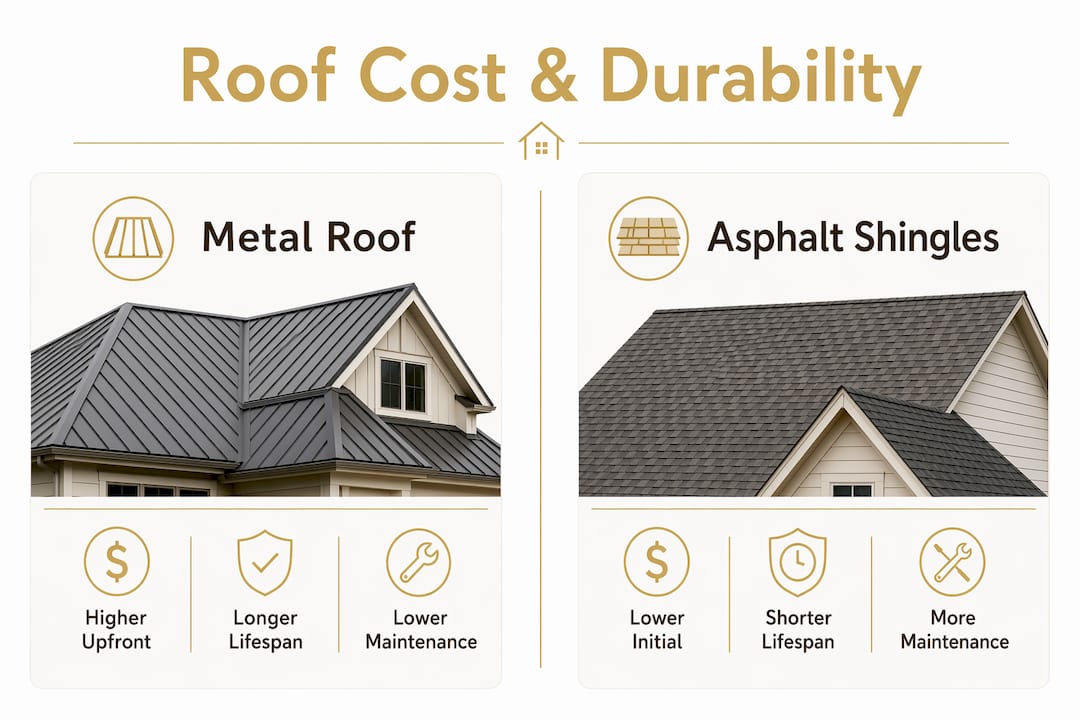
- Metal (standing seam): installed cost significantly higher per square foot; lifespan notably longer than asphalt shingles
- Asphalt shingles (architectural): installed cost lower per square foot; lifespan notably shorter than metal roofs
- 3-tab asphalt shingles: installed cost lowest among options; lifespan shortest among roofing types
A metal roof costs significantly more upfront. Over multiple decades, asphalt roofs require multiple replacements, which erases that gap and then some. The sections below show exactly how that math works, what can go wrong with either material, and how to hire a contractor who won’t undermine whichever roof you choose.
Table of Contents
- How do metal roofs and asphalt shingles compare side by side?
- What does a metal roof actually cost over time?
- How does each material hold up in real-world conditions?
- What does ongoing maintenance actually look like?
- How do aesthetics and resale value factor in?
- How do you hire a contractor who won’t ruin your roof?
- When does metal actually pay off? A breakeven example
- Which roof is right for your situation?
- Key Takeaways
- The case for getting the installation right the first time
- Prestigioushome can help you make the right call for your home
- Useful sources
How do metal roofs and asphalt shingles compare side by side?
| Dimension | Standing Seam Metal | Architectural Asphalt |
|---|---|---|
| Upfront cost (installed/sqft) | Higher installed cost per square foot | Lower installed cost per square foot |
| Expected lifespan | Longer lifespan expected | Shorter lifespan expected |
| Typical warranty | Manufacturer warranties vary | Manufacturer warranties vary |
| Maintenance needs | Generally low maintenance | Moderate maintenance required |
| Wind resistance | Higher wind resistance with proper installation | Moderate wind resistance depending on product |
| Fire rating | Generally high fire rating | Generally high fire rating with underlayment |
| Energy efficiency | Can reduce cooling costs substantially | Moderate energy performance, improved by lighter colors |
| Aesthetic options | Variety of metal roof styles available | Wide variety of styles and textures available |
| Resale value impact | Often favorable in severe weather markets | Typically neutral to somewhat positive |
| Recyclability | Contains recycled content; recyclable | Commonly ends up in landfills |
A note on variability: every row in this table shifts based on climate, product grade, and installer skill. A premium architectural shingle installed with proper attic ventilation in a mild climate can outperform a budget metal panel installed by an inexperienced crew in a coastal salt environment. Geography and workmanship are not footnotes — they’re major variables.
What does a metal roof actually cost over time?
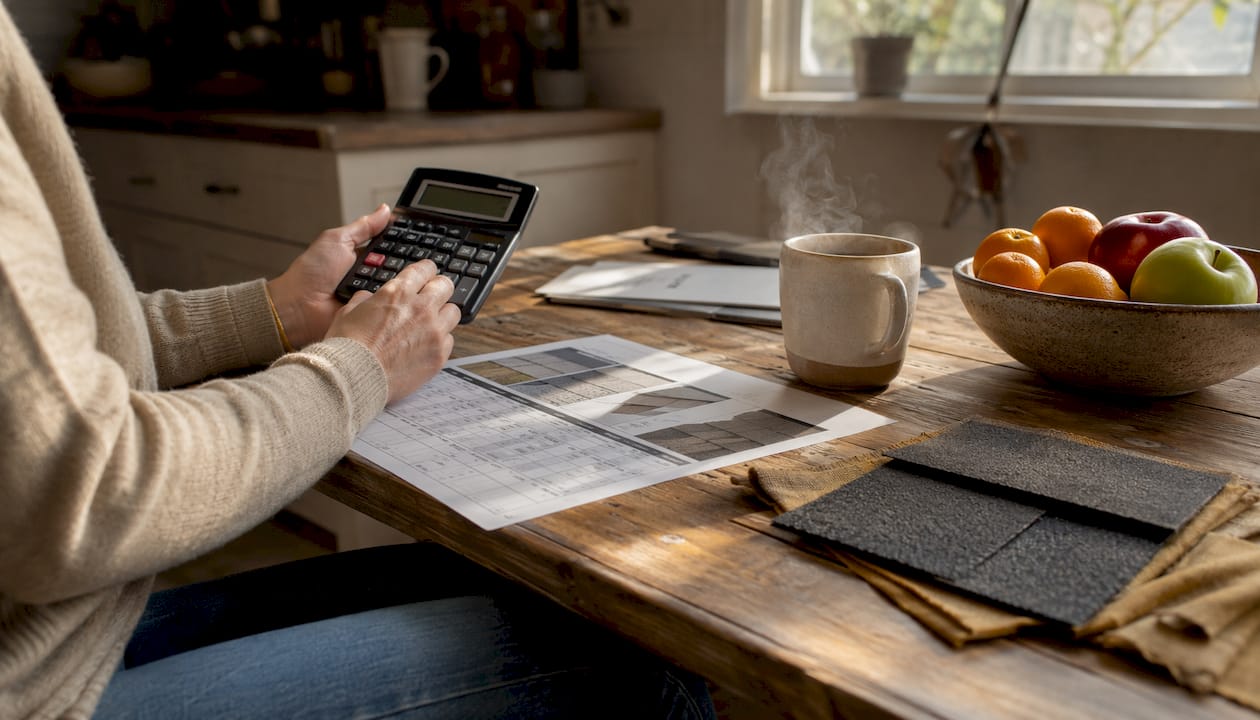
The upfront gap is real, but it’s only half the picture. A 2,000 sq ft roof illustrates the difference clearly.
Installed cost comparison
| Material | Cost per Sqft | Total Installed (2,000 sqft) |
|---|---|---|
| 3-tab asphalt | $3.00–$5.00 | $6,000–$10,000 |
| Architectural asphalt | $4.50–$8.50 | $9,000–$17,000 |
| Metal shingles | $8.50–$14.00 | $17,000–$28,000 |
| Standing seam steel | $9.50–$16.00 | $19,000–$32,000 |
One important context for 2026: steel and aluminum tariffs raised metal roofing material costs roughly 12–18%, adding approximately $1.50–$2.50 per square foot for standing seam in many markets. That’s real money on a full roof, and it’s worth getting fresh quotes rather than relying on figures from 2024 or earlier.
The 50-year math
Assume a 2,000 sq ft home. Architectural shingles at a representative installed cost, replaced multiple times over several decades, resulting in substantially higher total replacement spending before maintenance and energy costs. A standing seam metal roof, typically costing $19,000–$32,000 installed on a 2,000 sq ft home, needs no replacement over that same horizon. Add energy savings on cooling costs in a warm climate, plus potential insurance discounts in high-wind or hail-prone states, and the metal roof’s lifetime cost advantage becomes substantial. A metal roof can eliminate 2–3 full replacement cycles over a 50–60 year horizon, which is the core of the financial case.
The 25-year picture is tighter. If you’re comparing metal at an installed cost of $19,000–$32,000 against one shingle roof at $9,000–$17,000 with no replacement yet needed, the metal roof needs to deliver meaningful energy and insurance savings to break even by year 15. In a hot climate with high cooling bills, that’s plausible. In a mild Pacific Northwest climate with low cooling loads, the breakeven stretches closer to 20 years.
Pro Tip: Before signing any roofing contract, call your homeowner’s insurance carrier and ask specifically about discounts for impact-resistant or Class 4 metal roofing. Also check your state’s energy office for cool-roof rebates — some utility programs cover $500–$2,000 of the cost difference. These two line items can shift your personal breakeven by two to four years.
How does each material hold up in real-world conditions?
Manufacturer warranties are marketing documents as much as they are performance guarantees. A “30-year shingle” functions for roughly 22–30 years in practice, depending heavily on attic ventilation and local climate. A standing seam steel roof installed by a certified contractor will typically last 50–60 years.
What shortens shingle life
- Poor attic ventilation is the single biggest killer. Inadequate airflow per IRC R806 accelerates thermal cycling and granule loss, sometimes cutting shingle life by five to ten years.
- Granule loss starts slowly, shows up in gutters, and signals the shingle’s UV protection is degrading.
- Algae and moss are cosmetic at first but hold moisture against the shingle surface, speeding deterioration.
- Curling and cupping at shingle edges indicate moisture cycling or improper installation and usually mean replacement is coming within a few years.
What shortens metal roof life
- Exposed fasteners on screw-down panels back out over time, creating leak points. Concealed-fastener systems (standing seam) avoid this almost entirely.
- Coating failure on lower-grade panels allows rust to develop, particularly in coastal or high-humidity environments.
- Oil-canning — that subtle waviness you sometimes see on flat metal panels — is mostly aesthetic and not a structural problem, though it alarms homeowners who haven’t seen it before.
- Poor flashing at valleys, chimneys, and penetrations is where most metal roof leaks actually originate, not in the panels themselves.
On weather performance: metal roofs in Class 4 impact-resistant ratings handle hail significantly better than standard shingles. Wind uplift ratings for concealed-fastener standing seam systems are higher than those for most architectural shingles, which vary depending on product class and installation. In wildfire-prone areas, both materials can achieve a Class A fire rating, but metal requires no additional underlayment treatment to get there.
What does ongoing maintenance actually look like?
The honest answer: metal roofs need less maintenance, but they’re not zero-maintenance. Shingle roofs need more attention, and skipping it accelerates the replacement timeline.
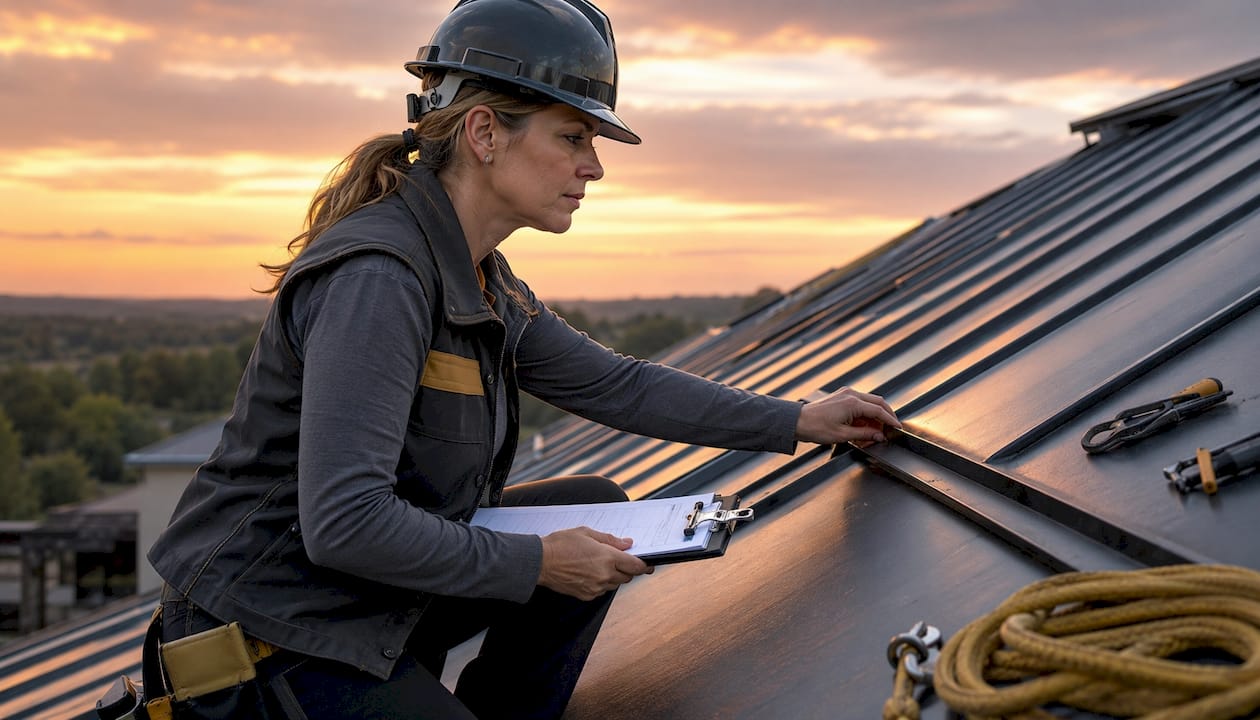
For a metal roof, an annual visual inspection covers most of what you need. Check flashing at all penetrations and valleys, look for any fastener backing out on exposed-fastener systems, clear debris from valleys and gutters, and look for any scratches in the coating that could start a rust point. Most years, nothing needs repair. A professional inspection every three to five years is a reasonable cadence.
Shingle roofs warrant a closer look every one to two years. Granule accumulation in gutters, lifted or cracked shingles after a wind event, and dark streaking from algae are the things to catch early. A localized shingle replacement typically runs $150–$400 for a small section. Flashing repairs, which are the most common source of leaks on both roof types, run $200–$500 depending on location and complexity.
Pro Tip: After any hail event, get a professional inspection before filing an insurance claim. Document the damage with photos first. On a metal roof, small dents from hail are often cosmetic and don’t affect performance — but on a shingle roof, hail impact that removes granules is a legitimate claim. Knowing the difference saves you from an unnecessary claim that could affect your premium.
The maintenance cost gap over 20 years is real but not dramatic. Metal roofs typically run $200–$500 total in minor repairs over two decades. Shingle roofs, with periodic localized replacements and more frequent flashing attention, can run $1,500–$3,500 over the same period. Neither number changes the big-picture math much, but it does add up.
How do aesthetics and resale value factor in?
The old knock on metal roofing — that it looks industrial or agricultural — is genuinely outdated. Modern stone-coated steel, metal shingles, and standing seam profiles mimic slate, cedar shake, and clay tile convincingly. For high-desert or contemporary architecture, standing seam metal is often the design-forward choice, not the compromise.
That said, neighborhood context matters. In a subdivision where every house has architectural shingles, a standing seam metal roof can look out of place and may not command a premium at resale. In markets with frequent hail or hurricane exposure, buyers actively seek metal roofs and will pay for them. Regional variation in buyer perception is significant enough that you should ask a local real estate agent what buyers in your specific market think before assuming metal adds value.
The recyclability angle is worth noting for buyers who care about sustainability. Metal roofing carries 25–95% recycled content and is 100% recyclable at end-of-life. Most asphalt shingles go to landfill. For a growing segment of buyers, that’s a meaningful differentiator.
For homeowners weighing how a roof upgrade fits into a broader home value strategy, the roof’s condition and material type consistently show up in buyer inspections and appraisals. A new metal roof signals low maintenance and durability to buyers in a way that a five-year-old shingle roof simply doesn’t.
How do you hire a contractor who won’t ruin your roof?
Installation quality often matters more than the material itself. A well-installed shingle roof outperforms a poorly installed metal one every time. Improper metal installation — wrong fasteners, exposed screws, poor flashing — is a primary cause of premature failure. Here’s what to ask and verify before signing anything.
Questions to ask every contractor
- Are you manufacturer-certified for this specific metal system? (Ask for documentation.)
- What fastening method do you use — concealed or exposed? Why?
- What underlayment and ice-and-water shield do you specify, and where?
- Who holds the labor warranty, and is it transferable to a future buyer?
- Will you pull the required permit, and can I see proof of your license and insurance?
- Can you provide three references from similar projects in the last two years?
- What does your cleanup and disposal process look like, and is tear-off included in the bid?
Red flags to walk away from
- A bid that’s 30% or more below the others with no clear explanation
- No mention of flashing, underlayment, or ice-and-water shield as line items
- Pressure to skip the permit (“it’ll save you money”)
- No manufacturer certification for the metal system they’re proposing
- Vague warranty language that doesn’t specify who pays for labor on a warranty repair
For practical contractor selection guidance, the key principle is this: the warranty is only as good as the contractor standing behind it. A 50-year manufacturer warranty means nothing if the installer goes out of business or the warranty excludes labor costs. Get the full warranty document before signing, not after.
At project completion, collect the manufacturer warranty registration confirmation, the permit sign-off, and photos of the completed underlayment and flashing before the panels or shingles went on. Those photos are your evidence if a warranty dispute arises later.
When does metal actually pay off? A breakeven example
The breakeven question comes down to four variables: upfront cost difference, replacement cycles avoided, energy savings, and insurance discounts. Here’s how they interact over different ownership horizons for a 2,000 sq ft roof.
| Scenario | 10 Years | 15 Years | 25 Years | 50 Years |
|---|---|---|---|---|
| Asphalt total cost | $13,000 | $13,000 | $25,000 | — |
| Metal total cost | $25,000 | $25,000 | $25,000 | $25,000 |
| Metal advantage (before savings) | — | — | +$1,000 | +$20,000+ |
| Add energy savings (hot climate) | +$2,000–$4,000 | +$3,000–$6,000 | +$5,000–$10,000 | +$10,000–$20,000 |
| Add insurance discount (hail/wind zone) | +$1,500–$3,500 | +$2,500–$5,000 | +$4,000–$8,000 | +$8,000–$16,000 |
Assumptions: asphalt at $13,000 installed, replaced at year 25 and year 50 with 15% cost escalation; metal at $25,000 installed, no replacement; energy savings based on 25% cooling cost reduction in a warm climate; insurance discount of 10% on a $1,500 annual premium.
The sensitivity inputs that move the needle most are local energy costs and how often you’d actually re-roof. In a mild climate with low cooling bills and no hail risk, the breakeven stretches to 20–25 years. In Texas, Florida, or the Mountain West where hail is frequent and summers are long, insurance discounts of 5–35% and real cooling savings can push breakeven inside 12 years.
The 2026 tariff-driven price increases on steel and aluminum add roughly $1.50–$2.50 per square foot to standing seam costs, which pushes the breakeven out by one to two years in most scenarios. That’s worth factoring in when you’re getting quotes right now, but it doesn’t change the fundamental long-term math.
Which roof is right for your situation?
Three homeowner profiles cover most of the decision space.
Short-term sellers (planning to move within 5–7 years): Architectural asphalt shingles are the practical choice. The upfront savings are real, buyers in most markets are comfortable with a newer shingle roof, and you won’t be around long enough to capture the metal roof’s lifecycle savings. Spend the cost difference elsewhere in the home.
Long-term stayers (10+ years): Metal is the financially stronger choice in most U.S. climates, particularly if you’re in a hail corridor, hurricane zone, or hot-summer region. The lifecycle math works in your favor, and you’ll likely never deal with a full re-roof again.
Climate-risk homeowners (wildfire, hail, high wind): Metal is the clear recommendation regardless of how long you plan to stay. The insurance savings alone can be substantial, and the performance difference in a severe weather event is not marginal.
Pro Tip: When getting quotes, ask each contractor to provide the full material spec sheet, not just a product name. “Metal roof” can mean anything from a 26-gauge Galvalume standing seam panel to a thin painted steel shingle. The gauge, coating system, and fastening method determine whether you get 50 years or 20.
Before you sign any quote, confirm these items are included:
- Material specification (gauge, coating, manufacturer)
- Underlayment type and coverage area
- Ice-and-water shield at eaves, valleys, and penetrations
- Flashing details at all transitions
- Ventilation plan (ridge vent, soffit vent, or mechanical)
- Tear-off and disposal of existing material
- Permit fee and inspection schedule
- Warranty terms: manufacturer coverage, labor coverage, and transferability
Get at least three bids. Ask each contractor for two references from the same roof type installed at least five years ago, then call them.
Key Takeaways
Metal roofing costs roughly twice as much upfront but eliminates 2–3 full replacement cycles over 50 years, making it the stronger long-term investment for homeowners who stay 10 or more years.
| Point | Details |
|---|---|
| Years-to-stay rule | Choose metal if you plan to stay 10+ years; asphalt shingles make more sense for shorter horizons. |
| Lifetime cost drivers | Replacement cycles, energy savings (25% cooling reduction), and insurance discounts (5–35%) determine true cost. |
| Installation quality | Concealed fasteners, proper flashing, and manufacturer certification matter as much as the material itself. |
| Warranty reality | “30-year” shingles typically last 22–30 years; attic ventilation per IRC R806 is the biggest lifespan variable. |
| Prestigioushome | Prestigioushome helps Washington and Iron County homeowners evaluate roofing as part of a full custom build or remodel, with transparent cost planning from day one. |
The case for getting the installation right the first time
Most homeowners focus on the material choice and treat installation as a commodity. That’s the wrong order of priorities. The gap between a well-installed and a poorly installed roof — of either material — is larger than the gap between a good shingle roof and a good metal roof.
What I see consistently in the field: homeowners who went with the lowest bid end up with flashing that fails in year three, underlayment that wasn’t lapped correctly, or a metal panel system installed with the wrong fasteners for the local wind zone. None of that shows up in the warranty paperwork. It shows up in a leak, usually after the contractor has moved on.
The ventilation point deserves more attention than it gets. Attic ventilation following IRC R806 is the single most critical factor for extending asphalt shingle lifespan beyond manufacturer estimates. I’ve seen 25-year shingles fail at 14 years because the attic was running 160°F in summer. No amount of product quality compensates for that. On a metal roof, ventilation matters less for the roof itself but still affects the home’s energy performance and the condition of the roof deck underneath.
The other thing worth saying plainly: modern metal products have closed the aesthetic gap with shingles almost entirely. Stone-coated steel and metal shingles look genuinely good on a wide range of home styles. The perception that metal always looks like a barn roof is about 15 years out of date. If aesthetics have been your hesitation, it’s worth looking at current product lines before you decide.
Prestigioushome can help you make the right call for your home
Choosing between a metal and shingle roof is straightforward when you have the right information. Getting the installation right is where most homeowners need a partner who knows the local market, the permit process, and which contractors actually deliver on their warranties.
Prestigioushome works with homeowners across Washington and Iron Counties in Utah on custom builds and full remodels where roofing decisions are part of a larger project plan. That means your roof choice gets evaluated alongside your insulation, ventilation, and energy systems — not in isolation. The team uses 3D renderings and virtual consultations so you can see how different roof profiles look on your specific home before committing to a material.
Bring your current roof photos, the age of your existing roof, any HOA guidelines, and your timeline to a consultation. Prestigioushome will walk you through the cost comparison for your specific square footage, connect you with certified installers, and help you coordinate warranty documentation from start to finish. To get started, request a consultation and see current project examples on the site.
Useful sources
The following sources informed the cost figures, lifespan data, energy-savings estimates, and installation guidance in this article.
- RoofVista: Metal Roof vs Shingles Cost, Lifespan & ROI (2026) — Installed cost ranges per square foot for standing seam and asphalt, including 2026 tariff-adjusted figures and lifecycle cost reasoning.
- RoofVista: Metal Roof Pros and Cons (2026) — Energy savings data from Oak Ridge National Laboratory and Metal Roofing Alliance findings; insurance discount ranges; recyclability statistics.
- This Old House: Are Metal Roofs Worth the Investment? — Lifecycle replacement analysis and long-term cost framing for metal vs. asphalt.
- The Roofing Brief: Asphalt Shingle Roof Lifespan — Field performance data on shingle lifespan vs. manufacturer warranty claims; IRC R806 ventilation guidance.
- NerdWallet: Metal Roof vs Shingles — Installation quality factors, fastener types, and their effect on wind ratings and longevity.
- U.S. Department of Energy: Cool Roofs — Federal guidance on cool-roof energy performance and reflectance standards.
- Asphalt Roofing Manufacturers Association — Industry data on asphalt shingle performance, product classes, and installation standards.
- IIBEC: Wind Damage and Asphalt Shingles — Technical analysis of wind uplift behavior and common misconceptions about shingle wind ratings.

