

How much does a curbless shower cost compared to a traditional one?
Curbless showers typically cost more than a standard curbed shower by a notable margin. A traditional shower remodel generally costs several thousand dollars. Curbless versions usually cost significantly more, with luxury spa-style builds costing even higher in premium markets.
Here’s a quick breakdown of where costs land:
- Basic curbless remodel: typically costs in the lower thousands with minimal structural work
- Mid-range installation: costs increase with porcelain tile, frameless glass, and linear drain features
- Luxury spa-style build: features such as heated floors, natural stone, and custom drainage can significantly increase costs
The premium over a curbed shower reflects the additional engineering work required: floor recessing, expanded waterproofing zones, linear drain installation, and longer skilled labor time. None of that is optional. Skip any one piece and you risk water damage that costs far more to fix than the savings were worth.
Cost snapshot: A standard custom shower averages several thousand dollars. A curbless drypack system costs noticeably more. Premium curbless builds are higher still.
Table of Contents
- Why curbless showers cost more than traditional designs
- Installation considerations that affect your project
- Benefits and drawbacks worth knowing before you commit
- Key cost factors that shape your final budget
- What materials actually cost: tiles, membranes, and drains
- What labor costs and how long the project takes
- How remodeling scope changes what you’ll spend
- Prestigioushome handles curbless shower remodels in Southern Utah
- Key Takeaways
Why curbless showers cost more than traditional designs
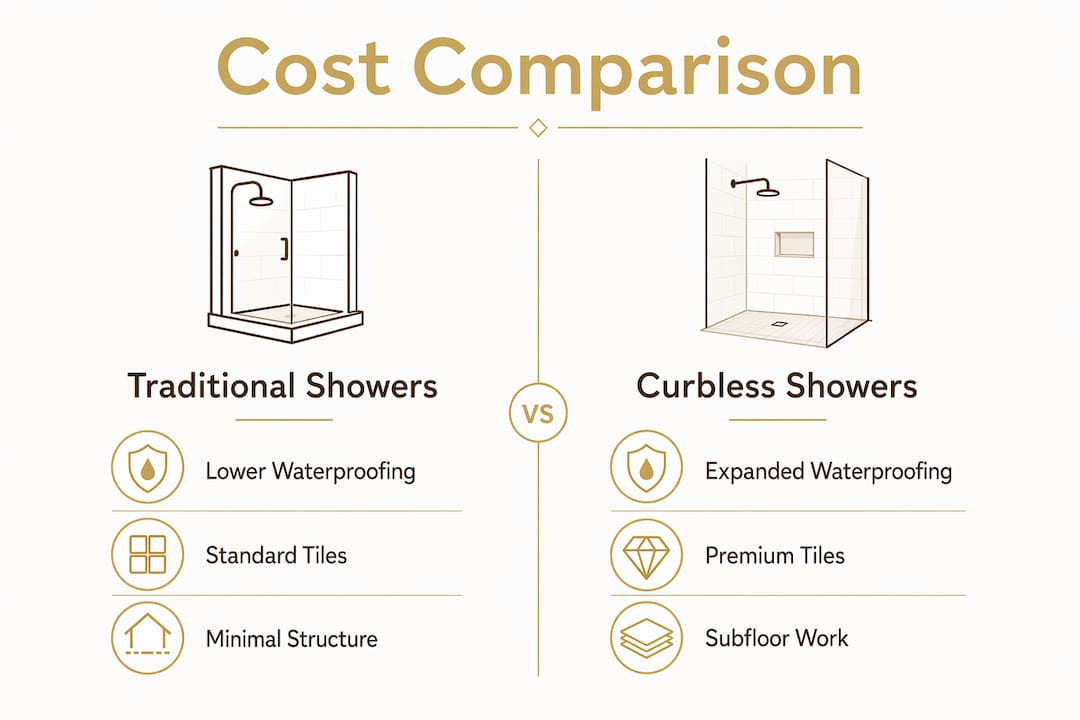
The price gap isn’t arbitrary. Every dollar above a standard shower traces back to a specific technical requirement.
- Floor modification: Creating the proper slope for water drainage means either recessing the subfloor or building it up. Neither is quick or cheap.
- Extended waterproofing: Without a curb to contain water, the entire bathroom floor becomes a wet zone. That demands a continuous, high-quality membrane well beyond what a standard shower pan covers.
- Linear drains: A linear drain costs $400–$1,200, compared to $100–$400 for a traditional point drain. The installation is more complex too, requiring precise plumbing coordination.
- Skilled labor: Slope engineering, membrane application, and drain placement all require experienced tile setters and plumbers. The work takes longer, and that time shows up in the final invoice.
A curbless shower effectively turns your bathroom into a wet room, which is why the waterproofing scope expands so dramatically compared to a conventional build.
Installation considerations that affect your project
Not every bathroom is equally ready for a curbless conversion. Several structural and code factors can push costs up before a single tile is set.
- Subfloor type: Structural modifications vary depending on the subfloor type and complexity, potentially adding significant cost before tile or waterproofing begins.
- Drain placement: The drain should sit opposite the shower opening, not near the door. This positioning controls water spread and prevents leaks into the rest of the bathroom. It’s a small detail that requires experienced plumbing coordination.
- Flood testing: Reputable contractors flood-test the waterproofing membrane for an extended period before any tile installation. If the membrane fails, you catch it before it’s buried under $5,000 worth of stone.
- Permits and code: Structural or plumbing work typically triggers a permit requirement. Permit costs vary by jurisdiction and project complexity. Check your local bathroom remodeling permit rules before finalizing your budget.
- Waterproofing systems: Drypack mortar bed systems are time-tested and durable but labor-intensive. Foam panel systems like Wedi or Schluter Kerdi install faster and reduce labor costs, though material costs are higher upfront.
Benefits and drawbacks worth knowing before you commit
Curbless showers earn their price premium for some homeowners and not for others. Here’s an honest look at both sides.
Benefits:
- Barrier-free entry: No threshold to step over means reduced trip risk and better usability for anyone with mobility challenges or aging-in-place goals.
- Modern aesthetic: The open, seamless look reads as spa-like and spacious, even in smaller bathrooms.
- Resale appeal: Accessibility features increasingly attract buyers across all age groups.
Drawbacks:
- Higher upfront cost: The premium is real and non-negotiable given the structural requirements.
- More demanding maintenance: Natural stone requires regular sealing, and the waterproofing membrane needs to be high quality from day one. Cheap materials here lead to subfloor damage that’s expensive to remediate.
- Water containment: Without a curb, water can spread further onto the bathroom floor. Proper slope engineering and drain placement minimize this, but it’s a real consideration for smaller bathrooms.
- Not maintenance-free: Premium finishes need ongoing attention to keep the waterproofing system intact over time.
Key cost factors that shape your final budget
Subfloor and structural work
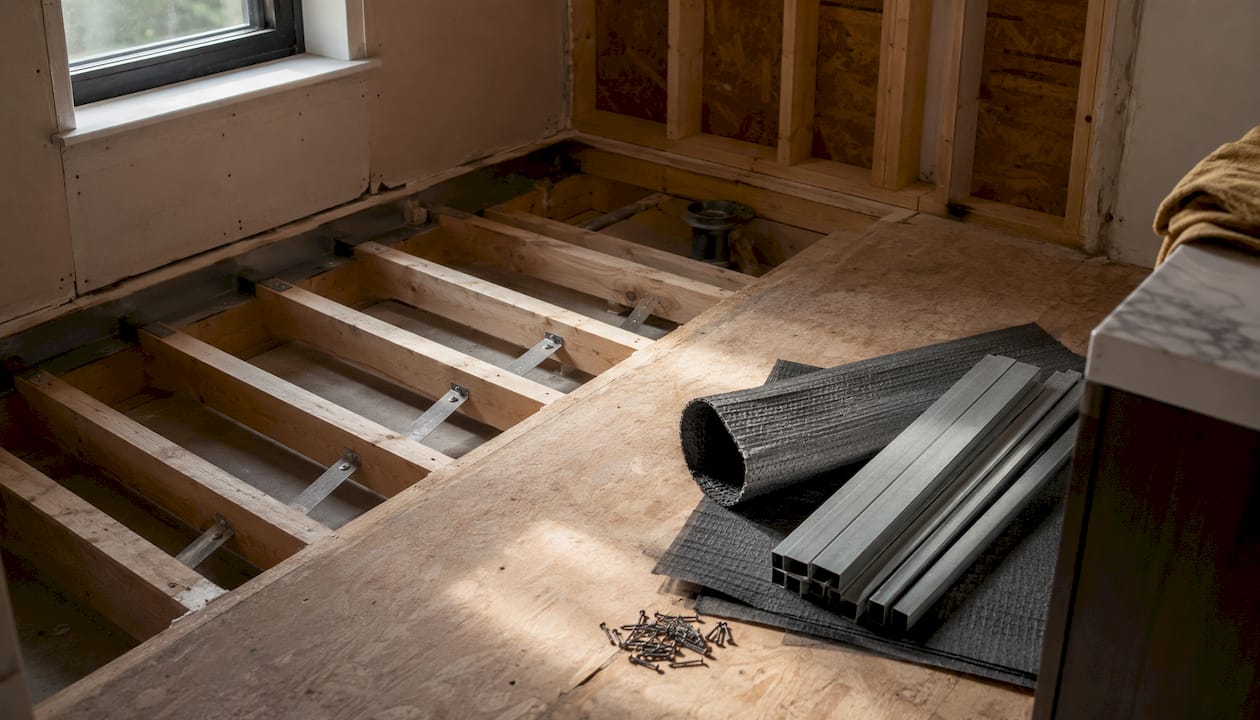
This is the most variable line item in any curbless shower project. Wood-frame homes often need joist recessing; slab homes need build-up. Either way, the cost ranges from $1,800 to over $5,000 before tile or waterproofing even begins. Get a structural assessment early.
Tile selection
Mosaic tiles increase installation time and cost significantly compared to large-format porcelain. More grout lines mean more alignment work and more labor hours. Tile installation runs $3–$25+ per square foot depending on material and complexity. Large-format porcelain is often the sweet spot for cost and durability.
Waterproofing materials
The membrane system you choose affects both durability and price. Premium systems cost more upfront but protect against the kind of subfloor damage that turns a $15,000 remodel into a $30,000 repair. Don’t let a contractor cut corners here.
Add-on features
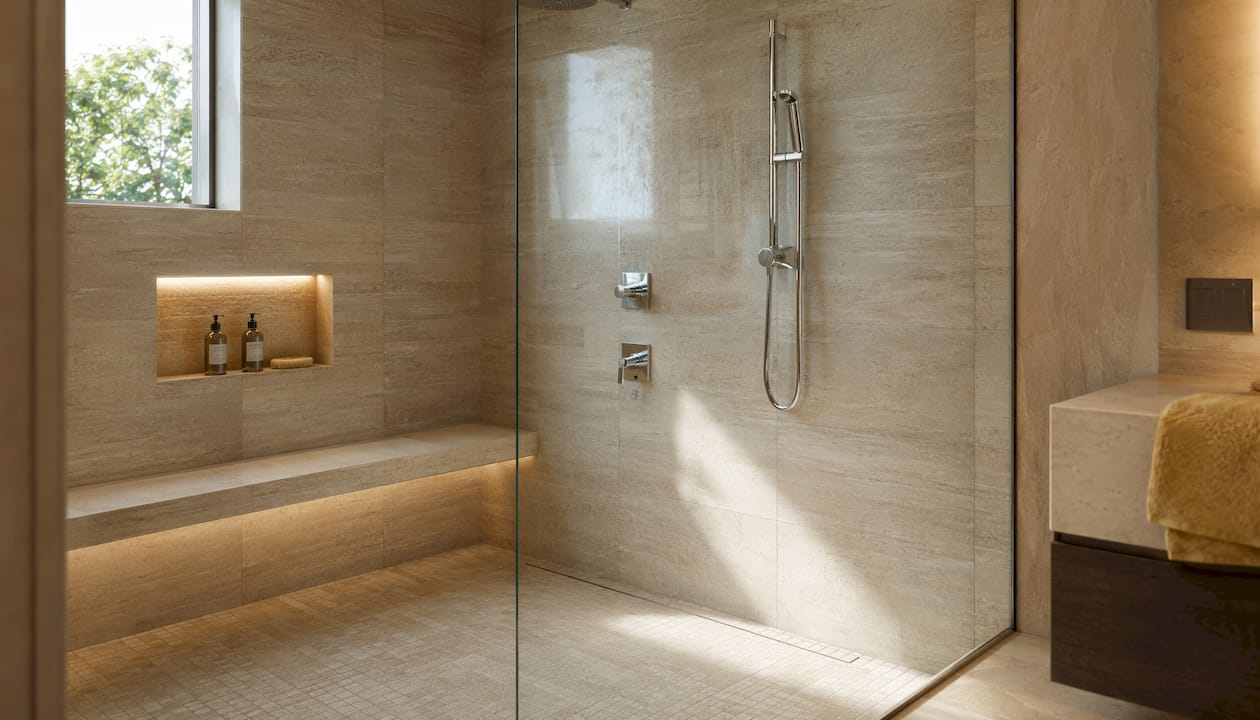
Built-in niches, benches, heated floors, and frameless glass enclosures each add meaningful cost. Frameless glass alone runs $2,000–$8,000+ depending on size and glass thickness. Budget for these separately rather than hoping they fit within a base estimate.
Pro Tip: Prioritize your waterproofing budget above everything else. A failed membrane on a curbless shower doesn’t just mean a wet floor — it means structural damage, mold remediation, and a full tear-out. Investing in a quality system like Schluter Kerdi or Wedi upfront is far cheaper than fixing a failure two years later.
What materials actually cost: tiles, membranes, and drains
| Material | Typical Cost Range |
|---|---|
| Standard porcelain tile | $3–$25 per square foot |
| Large-format porcelain | $3–$25 per square foot |
| Natural stone tile | $15–$25+ per sq ft |
| Point drain (traditional) | $100–$400 |
| Linear drain | $400–$1,200 |
| Linear drain (installed) | $1,800 to over $5,000 |
Waterproofing is where the real cost gap between a curbless and traditional shower lives. A standard shower pan covers a contained area. A curbless build requires waterproofing across the entire wet zone, which can mean the full bathroom floor. That’s a substantially larger material and labor commitment.
Natural stone looks stunning but carries the highest ongoing cost. It needs sealing at installation and periodically after, and small mosaic cuts in stone add significant labor hours. Porcelain gives you a cleaner installation at a lower total cost.
What labor costs and how long the project takes
Labor typically accounts for a significant portion of the total project cost in a curbless shower remodel, covering tile installation, plumbing and drainage, and frameless glass installation. A straightforward remodel often takes one to three weeks, with additional time for flood-testing and more complex elements. Factor that into your project schedule, especially if you’re working with a single bathroom.
For a broader sense of what bathroom remodel costs look like across different project scopes, it helps to see the shower as one component within a larger budget.
How remodeling scope changes what you’ll spend
A curbless shower doesn’t exist in isolation. How much of the bathroom you’re touching directly affects the final number.
Shower-only replacement: If the existing layout works and you’re swapping a curbed shower for a curbless one in the same footprint, you’re looking at the lower end of the range. Structural work is limited, plumbing stays mostly in place, and the project scope is contained.
Partial bathroom renovation: Adding a curbless shower while updating fixtures, flooring, or vanity expands the project. Costs climb because trades are on-site longer and coordination between plumbing, tile, and carpentry increases.
Full bathroom remodel: A complete gut-and-rebuild that includes a curbless shower typically runs $15,000–$30,000+ for a mid-range master bath. You’re paying for demolition, new plumbing rough-in, full waterproofing, tile throughout, fixtures, and glass. The Utah bathroom remodel cost guide breaks down regional pricing in more detail for homeowners planning projects in Washington and Iron Counties.
One practical note: combining a curbless shower with a full remodel often delivers better value per dollar than doing them separately. Trades are already mobilized, walls are already open, and the disruption is consolidated into one project window.
Prestigioushome handles curbless shower remodels in Southern Utah
A curbless shower done right requires the kind of precision that separates a contractor who has built one from a contractor who has built dozens. Prestigioushome works with homeowners across Washington and Iron Counties, Utah, on exactly these projects — bathroom remodels where the details matter and the waterproofing has to be right the first time.
The process starts with a virtual consultation and 3D rendering so you can see the design before a single tile is ordered. From there, Prestigioushome manages the structural assessment, waterproofing system selection, tile installation, and plumbing coordination under one roof. No juggling subcontractors or wondering whether the membrane was flood-tested.
If you’re planning a curbless shower as part of a larger bathroom renovation or a full home remodel in Southern Utah, reach out to Prestigioushome for a project estimate and see what the build actually looks like before you commit.
Key Takeaways
A curbless shower costs more than a traditional curbed shower due to structural floor work, extended waterproofing, linear drain installation, and skilled labor requirements.
| Point | Details |
|---|---|
| Expect a significant price premium | Curbless showers cost more than traditional shower remodels. |
| Subfloor work drives variability | Structural modifications can add notable costs before waterproofing or tile work begins. |
| Waterproofing is the highest-stakes line item | A quality membrane system is essential to avoid costly subfloor damage. |
| Remodeling scope shifts the total significantly | A shower-only swap costs less than a full bathroom gut; combining projects often provides better value. |
| Prestigioushome | Serves Washington and Iron Counties, Utah, providing comprehensive bathroom remodels including curbless shower builds with design previews and project management. |

