

In Utah, a typical bathroom remodel runs roughly $7,760–$33,950, with a mid-range 60 sq ft project averaging around $21,600. That single number is the most useful anchor for planning: it reflects Utah’s regional cost multiplier of 0.97x against the national average, meaning you’re not paying a steep premium just for being in the state. But the spread between a basic refresh and a full master bath gut is enormous, so knowing which tier fits your project matters more than any single average.
Typical ranges include a basic refresh with cosmetic updates and the same layout, a mid-range full remodel with updated tile, fixtures, vanity, and plumbing, and luxury or master baths featuring full gut remodels with custom finishes and layout changes.
Utah projects run roughly 4% above the national average in some estimates, while others place the state slightly below. The variance depends heavily on your city, your finishes, and whether you’re moving any plumbing. Get at least three itemized bids before committing to any number.
Table of Contents
- How much does a bathroom remodel cost in Utah by scope?
- What does a bathroom remodel actually include?
- What drives the biggest price differences in Utah quotes?
- How long does a Utah bathroom remodel take?
- Three Utah project budgets, broken down by line item
- How to get accurate quotes and choose a Utah contractor
- Utah-specific factors that affect your cost and timeline
- Key Takeaways
- What most homeowners get wrong about Utah bathroom budgets
- Prestigioushome makes Utah bathroom remodels straightforward
- Useful sources and further reading
How much does a bathroom remodel cost in Utah by scope?
The four tiers below cover the full range of Utah bathroom renovation expenses. Each tier reflects what’s actually being replaced, not just a price band.
Typical tiers of bathroom remodel scope include basic refresh, mid-range remodels, full/gut remodels, and luxury/master projects, with costs increasing alongside the scope of work and quality of finishes.
Basic refresh means cosmetic work only: new paint, updated fixtures, a replacement vanity top, maybe a new mirror and lighting. The layout stays exactly as-is, and no walls open up.
Mid-range is where most Utah homeowners land. You’re replacing tile, installing a new vanity cabinet, updating the tub or shower surround, and swapping out all plumbing fixtures. Walls may open for minor plumbing work, but the drain locations don’t move.
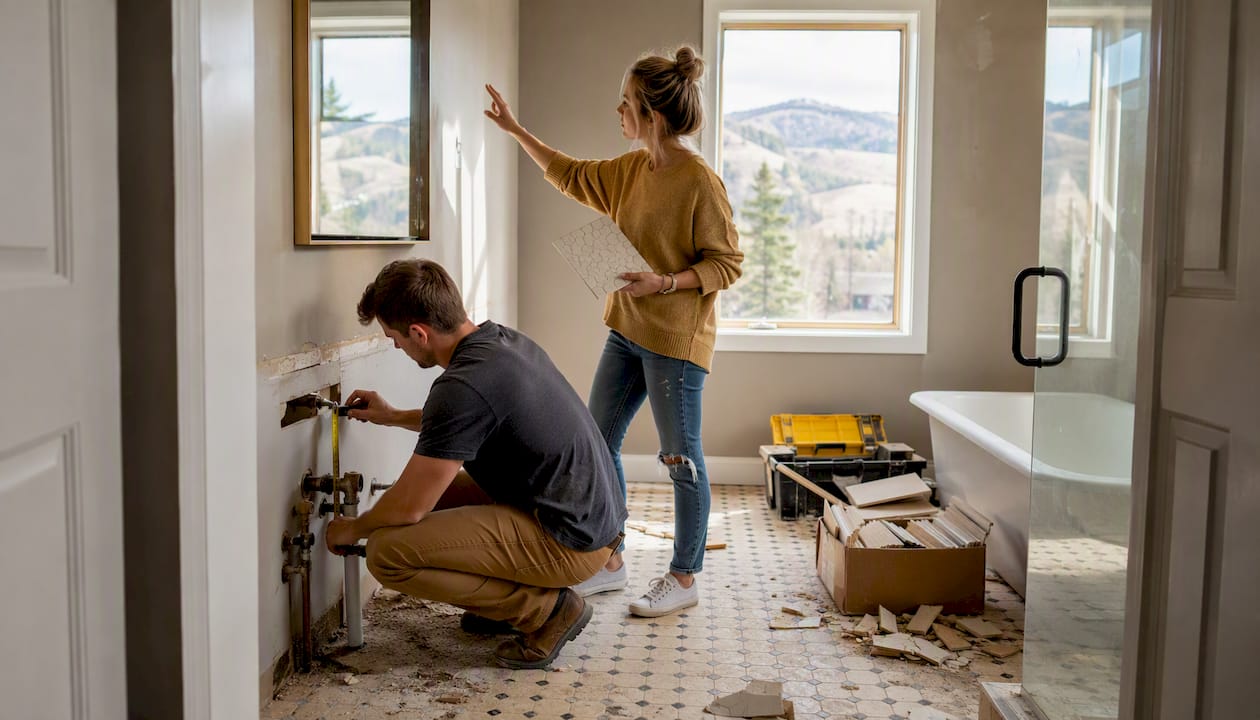
Full gut remodel takes everything down to the studs. New cement board, new waterproofing, new plumbing rough-in, new electrical. This is the right call when the existing bathroom has moisture damage, outdated wiring, or a layout that simply doesn’t work.
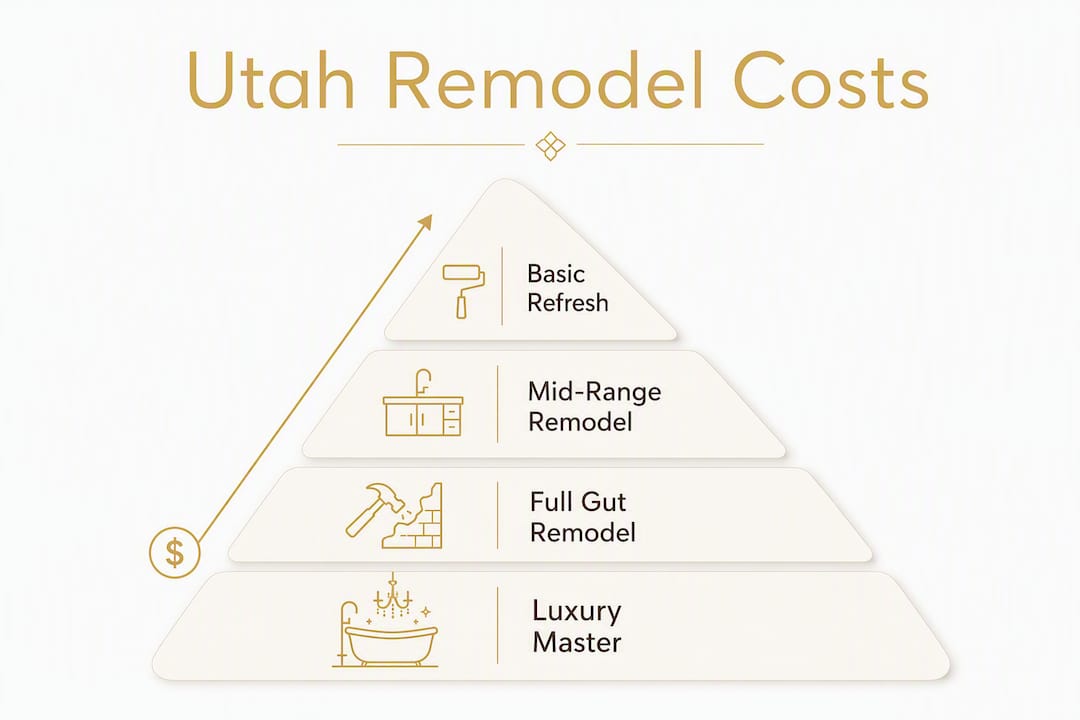
Luxury and master bath projects add custom tile work, frameless glass enclosures, heated floors, freestanding tubs, and often a layout reconfiguration. At 120 sq ft, costs can reach $26,400–$67,200 depending on finish level.
One regional note: Salt Lake City metro and Park City tend to have higher-end pricing, while cities like West Valley City and Provo run somewhat lower. Rural Iron County projects can come in below statewide averages when labor availability is good.
What does a bathroom remodel actually include?
Understanding what you’re paying for makes contractor quotes comparable. A mid-range or full remodel in Utah typically covers:
- Demolition and disposal: Removing existing tile, fixtures, drywall, and debris
- Framing and structural work: Any wall modifications, niche framing, or subfloor repairs
- Rough plumbing: Supply and drain lines, valve replacements, shower pan or liner installation
- Rough electrical: GFCI outlets, exhaust fan wiring, lighting circuits
- Waterproofing and cement board: Moisture barrier installation behind all wet areas
- Tile installation: Floor and wall tile, including setting, grouting, and sealing
- Vanity and countertop: Cabinet installation, countertop, and sink
- Plumbing fixtures: Faucets, showerhead, toilet, tub or shower valve trim
- Glass enclosure or shower curtain rod: Frameless glass runs $800–$2,500 installed
- Paint, trim, and accessories: Final finishes, towel bars, mirrors, lighting fixtures
- Permit fees and inspections: Typically $0–$1,200 depending on municipality
Hidden costs that don’t always appear in a first quote include asbestos or lead paint remediation in homes built before 1980, structural framing if walls are load-bearing, plumbing relocation (moving a drain can add $500–$2,000 to the rough plumbing line), and electrical panel upgrades if the existing service can’t support new circuits.
When reviewing a contractor estimate, find the line item for rough plumbing and ask specifically whether it includes moving any drain or supply locations. If the answer is vague, the quote is incomplete.
What drives the biggest price differences in Utah quotes?
Two quotes for the same bathroom can differ by $8,000 or more. Here’s where that gap actually comes from.
Layout changes and plumbing relocation
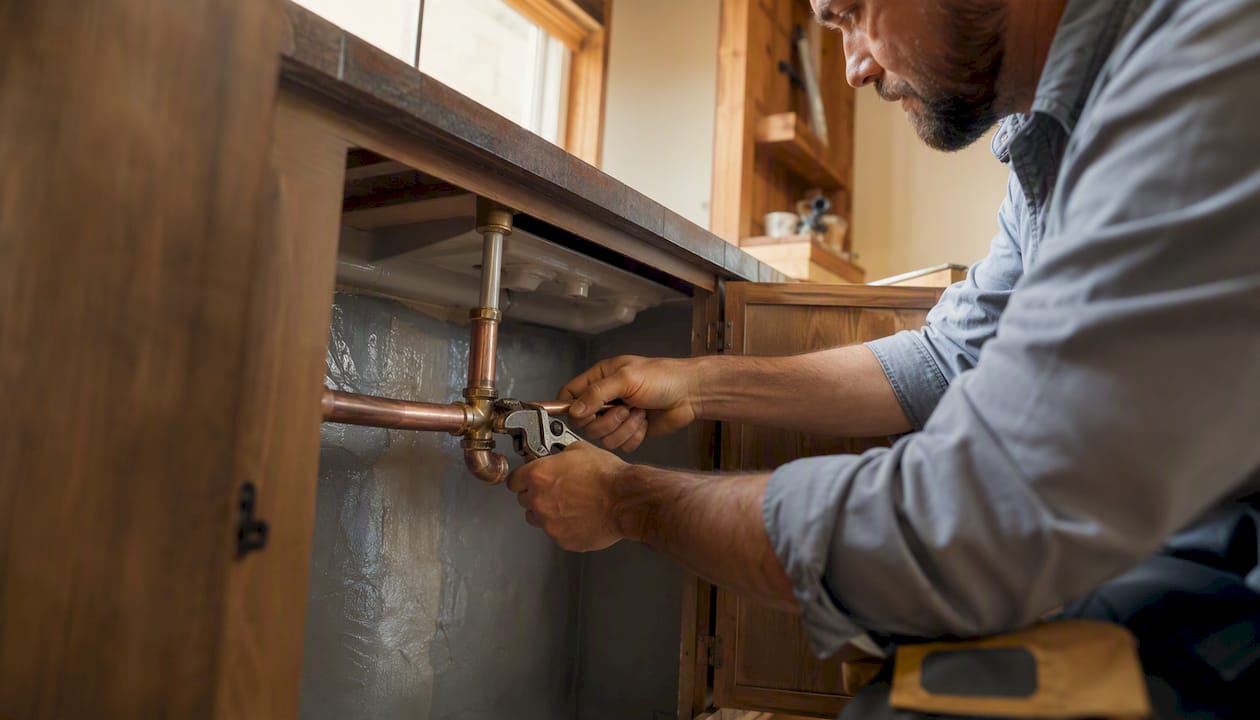
Moving a toilet, shower drain, or tub location requires opening the subfloor and rerouting drain lines. This is the single highest-impact decision in any remodel. Labor hours for mid-range projects run roughly 40–80 hours; premium jobs with layout changes exceed 100 hours. If you can keep fixtures in their existing locations, you save significantly on both labor and material.
Tile type and tile labor
Tile is where budgets quietly balloon. Large-format porcelain (24×24 or bigger) requires more precise substrate prep and cuts more slowly than standard 12×12. Mosaic tile on a shower floor takes three to four times longer to set than a simple field tile. The material cost difference between builder-grade ceramic and designer porcelain can be $2–$8 per square foot, but the labor difference is often larger.
Custom cabinetry and vanities
Stock vanities from a home improvement store run $300–$1,200. Semi-custom options from a local cabinet shop run $1,500–$4,000. Full custom built-ins can reach $6,000 or more. The jump from stock to semi-custom is usually worth it for fit and finish; full custom is a luxury choice, not a necessity.
Glass enclosures versus curtains
A frameless glass shower enclosure adds $1,500–$3,500 to a project compared to a simple curtain rod. It’s the single most visible upgrade in a bathroom and has a strong effect on resale perception, but it’s also where you can trim cost without sacrificing function if the budget is tight.
Heated floors and luxury mechanicals
Electric radiant floor heating adds $600–$1,500 for a standard bathroom, including the mat, thermostat, and installation. It’s a low-cost luxury relative to its impact on daily comfort, and it’s far cheaper to install during a remodel than as a retrofit later.
Pro Tip: If you’re already opening the subfloor to move a drain, that’s the moment to add radiant heat. The incremental labor cost is minimal when the floor is already torn up, and you avoid a second demo later.
How long does a Utah bathroom remodel take?
Most Utah bathroom remodels typically take several weeks from demo to final inspection. Here’s how that typically breaks down:
- Demo and rough inspection prep (2–4 days): Tear-out, debris removal, subfloor assessment
- Rough plumbing and electrical (3–5 days): New supply/drain lines, GFCI circuits, exhaust fan rough-in
- Waterproofing and cement board (1–2 days): Moisture barrier, board installation, seam taping
- Tile work (4–10 days): Floor and wall tile setting, grout cure time (minimum 24–48 hours before grouting, 72 hours before sealing)
- Vanity, fixtures, and trim installation (2–3 days): Cabinet setting, countertop, plumbing trim-out, electrical fixtures
- Final inspection and punch list (1–3 days): Municipal inspection, touch-ups, accessory installation
Several factors specific to Utah stretch these timelines. Summer and fall are peak remodeling seasons statewide, and contractors in Washington County and the St. George area book out 6–10 weeks in advance during those months. Park City and Summit County projects face similar demand pressure from resort-area construction. Permit wait times vary by municipality: some Utah cities turn permits in 5–7 business days, while others in rural counties can take 3–4 weeks.
Specialty materials — large-format tile, custom glass, specific plumbing fixtures — sometimes carry 2–4 week lead times. Order those before demo begins. Build at least one week of buffer into your contract schedule, and include a written clause specifying how material lead-time delays are handled so neither party absorbs unexpected costs.
Three Utah project budgets, broken down by line item
These examples use 2026 Utah pricing and reflect real project scopes, not theoretical minimums.
Example 1: Basic guest bath refresh (30 sq ft)
| Line item | Cost |
|---|---|
| Plumbing fixture swap (faucet, toilet) | $600 |
| Lighting and accessories | $300 |
This is a true cosmetic refresh with no tile work and no wall openings. At the low end of the Utah range, 30 sq ft projects can run $6,600–$16,800 when tile and waterproofing are included. The example above sits below that band because it avoids tile entirely.
Example 2: Mid-range full remodel (60 sq ft)
| Line item | Cost |
|---|---|
| Demo and disposal | $800 |
| Cement board and waterproofing | $600 |
| Permit and inspection | $600 |
This falls within the mid-range $13,200–$33,600 band for a 60 sq ft Utah bathroom. Costs rise toward $18,000–$21,600 when tile selections move upmarket or a frameless glass enclosure replaces the curtain rod.
Example 3: Premium master bath (90+ sq ft)
| Line item | Cost |
|---|---|
| Demo and disposal | $1,500 |
| Radiant floor heating mat and thermostat | $1,200 |
Labor, materials, and fixtures each carry roughly equal weight in a premium project. Permits and contingency together should represent at least 10–15% of your total budget. Projects in Salt Lake City or Park City with specialty contractors can push this example past $40,000.
How to get accurate quotes and choose a Utah contractor
The difference between a good remodel and a painful one usually comes down to how you selected your contractor, not how much you spent.
Questions to ask every contractor before signing
- Can you provide a fully itemized estimate with line items for labor, materials, fixtures, and permits?
- What is explicitly excluded from this scope?
- What specific fixture and tile makes/models are included, or will I select them separately?
- What is the projected start date and completion date?
- What is the payment schedule tied to project milestones?
- What warranty do you offer on labor and installed materials?
- Can you provide your Utah contractor license number and proof of general liability and workers’ comp insurance?
- Can you provide two or three references from similar bathroom projects in the past 12 months?
- Who pulls the permits, and will all work be inspected?
- How are change orders handled, and what is the written process?
Red flags to watch for: a lump-sum bid with no line items, a request for more than 30–40% upfront before work begins, a contractor who suggests skipping permits to save money, or no written change-order process. Any of those should send you to the next bidder.
For financing, Utah homeowners typically use a home equity line of credit (HELOC), a home equity loan, a personal loan, or contractor-arranged financing. Compare total interest cost and loan term, not just the monthly payment, before choosing. A $15,000 remodel financed at a high personal loan rate over five years costs meaningfully more than the same amount on a HELOC at a lower rate.
Pro Tip: Use an online calculator like CostFlowAI’s Utah bathroom estimator to generate a rough figure before your first contractor meeting. Walking in with a number gives you a baseline to test each bid against.
Utah-specific factors that affect your cost and timeline
Permits and inspections
Utah municipalities set their own permit fees and inspection requirements. Most bathroom remodels that involve plumbing or electrical work require a permit, and fees can vary based on the city and project size. Always verify requirements with your local building department before starting work. Skipping a permit creates problems at resale and can void your homeowner’s insurance coverage for related claims.
Seasonality and labor availability
Spring through early fall is peak season for Utah remodeling contractors, particularly in Washington County (St. George area) and along the Wasatch Front. Booking a project for November through February often means shorter wait times and occasionally better pricing, since contractors are filling their schedules. Resort communities near Park City see demand spikes tied to ski season construction and second-home renovations, which can push labor rates higher regardless of time of year.
Moisture control in Utah’s climate
Utah’s semi-arid climate creates a counterintuitive risk: because the air is dry, homeowners sometimes underinvest in bathroom moisture barriers, assuming the climate handles it. It doesn’t. Shower steam and standing water create localized humidity that damages framing and subfloors just as readily as in wetter climates. Quality moisture barriers and proper exhaust ventilation are non-negotiable for long-term durability and to maintain material warranties. Cutting corners here typically costs far more in remediation within five to ten years than the upfront savings.
When replacing interior doors during a remodel, local suppliers like One Day Doors & Closets of Utah can handle quick-turnaround door replacements without adding weeks to your project schedule.
Pro Tip: Ask your contractor specifically which moisture barrier product they use and whether it meets TCNA (Tile Council of North America) standards for wet areas. A contractor who can’t name the product is probably using whatever was cheapest at the supply house.
Key Takeaways
A Utah bathroom remodel costs $7,760–$33,950 for most projects, with the mid-range 60 sq ft benchmark near $21,600 and the biggest cost swings driven by plumbing relocation, tile selection, and finish level.
| Point | Details |
|---|---|
| Utah cost range | Most projects fall between $7,760 and $33,950; a 60 sq ft mid-range job averages $21,600. |
| Biggest cost drivers | Plumbing relocation, tile labor, and custom vanities move the price more than any other choices. |
| Timeline to expect | Plan for 3–8 weeks from demo to final inspection; add buffer for permit waits and material lead times. |
| Get itemized bids | Always request fully line-itemed estimates from at least three licensed, insured Utah contractors. |
| Prestigioushome option | Prestigioushome serves Washington and Iron Counties with transparent pricing, 3D renderings, and local project management. |
What most homeowners get wrong about Utah bathroom budgets
The number I see trip up homeowners most often isn’t the total budget. It’s the contingency. Most people allocate 5% for surprises, then discover moisture damage behind the shower wall, a subfloor that needs sistering, or a drain that’s two inches from where the new layout needs it. Those aren’t rare events. In older Utah homes, they’re practically expected.
The smarter framing: treat 10–15% contingency as part of the project cost, not a buffer you hope not to use. If you budget $18,000 for a mid-range remodel, hold $2,000–$2,700 in reserve before you start selecting tile. That way, when the contractor opens the wall and finds a problem, you’re making a calm decision, not a panicked one.
The other thing most guides understate is the value of keeping your layout. Moving a single drain can add $1,500–$2,000 in labor and materials. Moving the toilet and reconfiguring the shower in the same project can add $4,000–$6,000. Those are real dollars that could go toward better tile, a frameless glass enclosure, or simply staying on budget. Work with your existing plumbing footprint unless there’s a functional reason not to, and you’ll consistently come in closer to your original number.
Prestigioushome makes Utah bathroom remodels straightforward
Budgeting a bathroom remodel is one thing. Finding a contractor in Washington or Iron County who gives you a clear line-item estimate, pulls the permits, and actually finishes on schedule is another. Prestigioushome handles custom bathroom remodels across Washington and Iron Counties with a process built around transparency: virtual consultations, 3D renderings before demo begins, and itemized pricing so you know exactly what you’re approving.
No vague lump sums, no surprise change orders without written approval. Before your first meeting, pull together your bathroom dimensions, a few photos of the current space, and a rough sense of your budget range. That’s enough to get a meaningful estimate started. Request a free quote and see what a Utah bathroom remodel looks like when the process is handled locally, from planning through final inspection.
Useful sources and further reading
The cost figures in this guide draw from regional pricing calculators and contractor data specific to Utah. For your own planning, these sources are worth bookmarking:
- CostWhale: Bathroom Remodel Cost in Utah (2026) — statewide average and range data
- BuildCost: Utah Bathroom Remodel Cost (2026) — per-sq-ft breakdowns and size-based ranges
- RenoCanvas: Utah Bathroom Remodel Cost (2026) — timeline data and climate considerations
- CostFlowAI: Utah Bathroom Remodel Calculator — interactive estimator with regional multiplier
- FixHomeCosts: Utah City-Level Bathroom Remodel Prices — city-by-city breakdowns including Salt Lake City and Provo
- CurrentCost: Bathroom Remodel Price Guide for Utah Homeowners — component-level cost ranges and labor hour estimates
- Prestigioushome: 2026 Utah Bathroom Remodel Cost Guide — local contractor perspective and project case notes
For permit requirements, always verify directly with your city or county building department. Utah municipalities set their own fee schedules and inspection requirements, and those change periodically. No online guide, including this one, substitutes for a call to your local building department before work begins.

